





What's Happening?
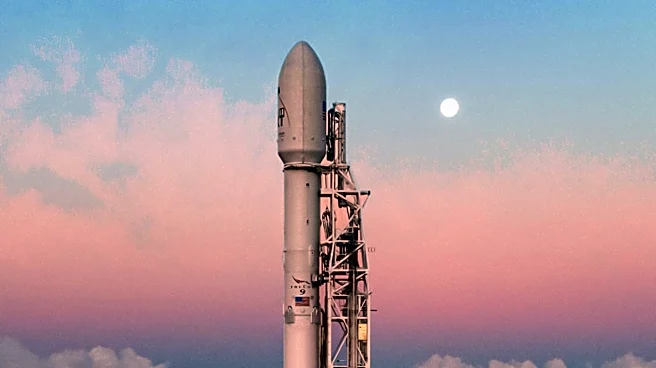
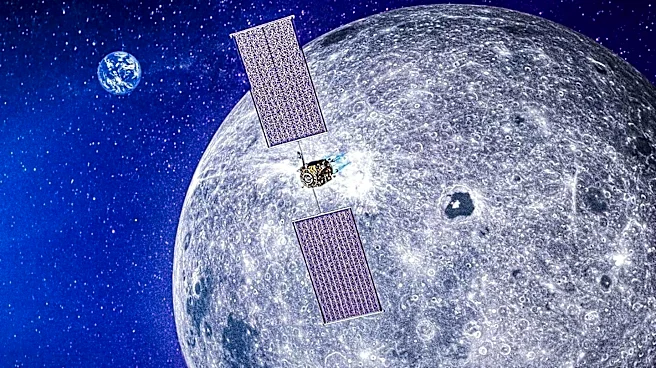
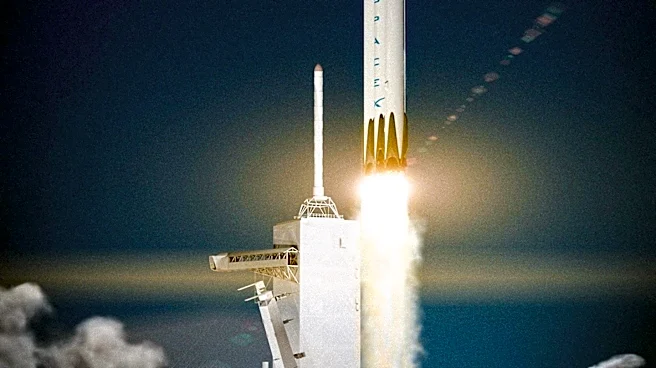
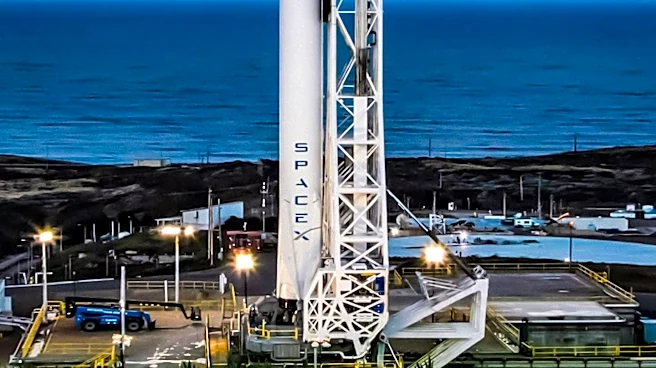
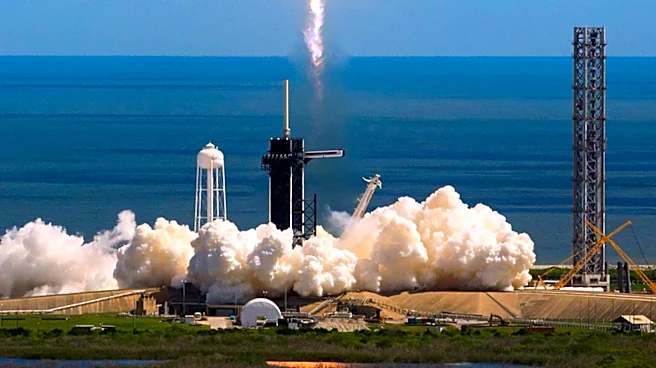
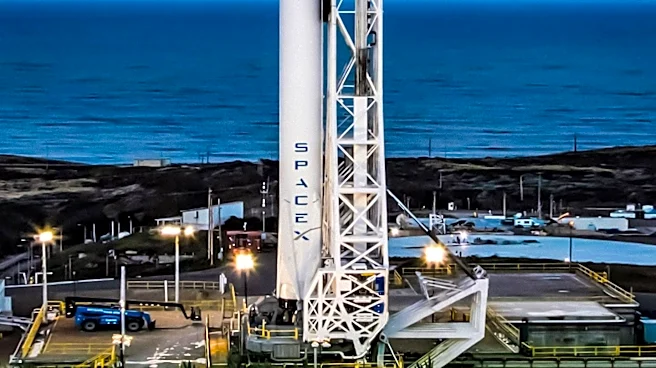
The Korea Aerospace Research Institute's Danuri spacecraft has captured images of the impact site where a SpaceX Falcon 9 rocket's upper stage crashed into the Moon on August 5, 2026. The rocket, initially launched in January 2025 to deploy Firefly Aerospace's
Blue Ghost lunar lander, remained in lunar orbit due to gravitational forces before impacting the Moon. The images show a darker area and a newly formed crater at the impact site, although the dust ejected is not visible. NASA plans to further investigate the site with its Lunar Reconnaissance Orbiter.
Why It's Important?
The images captured by the South Korean satellite provide valuable data for understanding the effects of artificial impacts on the lunar surface. This event highlights the complexities of space missions, where unintended consequences such as leftover debris can lead to significant impacts. The data gathered from this impact could inform future lunar missions, particularly in terms of managing space debris and understanding its effects on celestial bodies. Additionally, the collaboration between international space agencies underscores the global nature of space exploration and the shared interest in lunar research.
What's Next?
NASA's Lunar Reconnaissance Orbiter is scheduled to fly over the impact site to gather more detailed data. This investigation could provide insights into the composition of the lunar surface and the effects of high-speed impacts. The findings may influence future mission planning and debris management strategies. As space exploration continues to expand, understanding the implications of such impacts will be crucial for ensuring the safety and success of future missions.