




What's Happening?
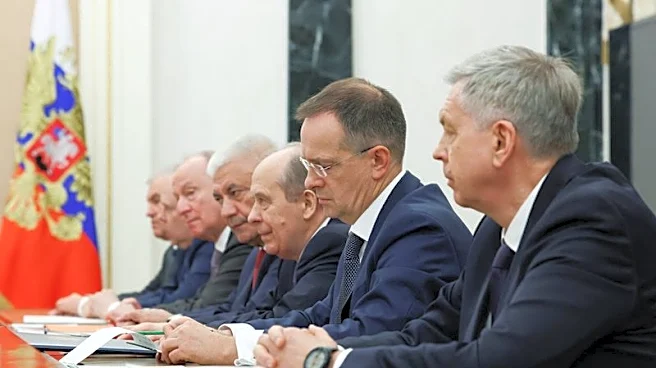
Secretaries of the Security Councils from Commonwealth of Independent States (CIS) member states met in Moscow on November 9 to discuss international and regional security concerns. The agenda included topics such as the militarization of NATO, the impact
of sanctions, information warfare, and perceived threats from the eastern borders of the Union State. Alexander Volfovich, State Secretary of the Security Council of Belarus, led the Belarusian delegation and emphasized the rapid shifts in global geopolitics, noting that Europe and the West are experiencing significant economic and political crises. Volfovich stated that CIS nations are increasingly facing new security challenges and threats due to their independent policies and cooperation, which are viewed unfavorably by some. He highlighted the use of 'dirty tactics' by the European Union and the West, including unilateral sanctions, information warfare involving AI-generated deepfakes, provocations, and direct military pressure. The meeting underscored the need for CIS member states to unite and build a robust collective defense system to safeguard their independence and address shared security threats. A key priority identified was fostering cooperation between the CIS, the Shanghai Cooperation Organization (SCO), and the Collective Security Treaty Organization (CSTO).
Why It's Important?
This meeting is significant as it reflects a growing alignment among CIS nations in their perception of external threats and their strategy for collective security. The discussions highlight a deepening concern among these states regarding NATO's expansion and what they term 'hybrid warfare' tactics, which they believe are aimed at undermining their sovereignty and stability. The emphasis on building a robust collective defense system and fostering cooperation with organizations like the SCO and CSTO indicates a strategic move to counter perceived Western influence and establish a stronger geopolitical bloc. For the United States and its allies, this development signals a hardening of positions among CIS countries and a potential for increased geopolitical friction. The accusations of 'dirty tactics' and information warfare, including the use of AI deepfakes, underscore a complex and evolving landscape of international relations where technological advancements are being weaponized. This could lead to further polarization and challenges in diplomatic engagement, particularly concerning regional security and stability in Eastern Europe and Central Asia.
What's Next?
The discussions held at the CIS Security Council meeting are likely to translate into concrete actions aimed at strengthening collective defense mechanisms and intelligence sharing among member states. Increased military cooperation and joint exercises within the CIS, SCO, and CSTO frameworks can be anticipated. Furthermore, there may be a concerted effort to develop countermeasures against information warfare, including strategies to combat AI-generated deepfakes and other forms of digital manipulation. Diplomatically, CIS nations may present a more unified front in international forums, advocating for their collective security interests and challenging what they perceive as unilateral actions by Western powers. This could lead to heightened tensions in diplomatic relations with the U.S. and its allies, particularly as these blocs solidify their positions. The focus on economic and military cooperation among CIS members, independent of Western influence, suggests a long-term strategy to build resilience against external pressures and foster greater self-reliance in security matters.
Beyond the Headlines
The meeting's emphasis on 'hybrid warfare' and the use of AI-generated deepfakes points to a significant evolution in modern conflict. Beyond traditional military threats, the weaponization of information and advanced technology presents new challenges to national security and societal stability. The CIS nations' focus on these aspects suggests a recognition of the pervasive nature of digital threats and the need for sophisticated defense mechanisms. This also raises broader questions about the future of international relations, where the lines between conventional warfare, cyber warfare, and information warfare are increasingly blurred. The collective response from CIS countries could set precedents for how other regional blocs address similar challenges, potentially leading to a global arms race in digital defense and offense. Furthermore, the narrative of 'dirty tactics' employed by the West could be used to justify more assertive foreign policies by CIS members, potentially escalating regional conflicts or creating new flashpoints. The long-term implications include a more fragmented global security architecture, with competing blocs developing their own security doctrines and technological capabilities.