








What's Happening?
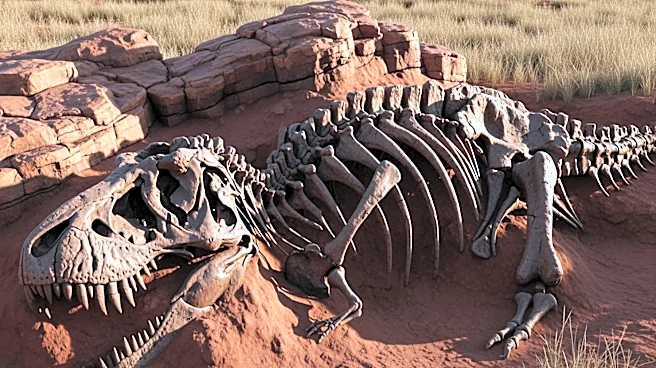
Gary 'Gus' Licking, a rancher from South Dakota, discovered dinosaur teeth on his property, leading to the unearthing of a 38-foot Tyrannosaurus rex skeleton. This significant find, made in 2021, is now set to be auctioned at Sotheby’s with an estimated
value of up to $30 million. The excavation, led by commercial paleontologist Thomas Heitkamp, took three years and involved meticulous work to uncover 183 fossil bone elements, making it one of the most complete T. rex specimens ever found. The fossil, named 'Gus' after the rancher, is expected to provide a substantial financial windfall for Licking's widow, Dana, as South Dakota law grants ownership of fossils found on private land to the landowner.
Why It's Important?
The auction of the T. rex skeleton highlights the intersection of paleontology and private ownership, raising questions about the commercialization of significant scientific discoveries. The potential $30 million sale underscores the lucrative nature of fossil finds on private lands, which can surpass traditional agricultural income. This event also reflects broader trends in the auction market, where rare and scientifically valuable items attract high bids from wealthy collectors. The sale could influence future fossil discoveries and ownership rights, impacting both the scientific community and private landowners.
What's Next?
The T. rex skeleton, 'Gus', will be the centerpiece of Sotheby’s Natural History auction in New York on July 14, 2026. The outcome of this auction could set a precedent for future sales of similar discoveries, potentially encouraging more private landowners to explore their properties for fossils. The financial arrangements between the landowner and the excavation team remain undisclosed, but the sale could lead to significant payouts depending on the agreed percentage of proceeds. The auction's results may also prompt discussions on the ethical implications of selling such important scientific artifacts to private collectors.