



What's Happening?
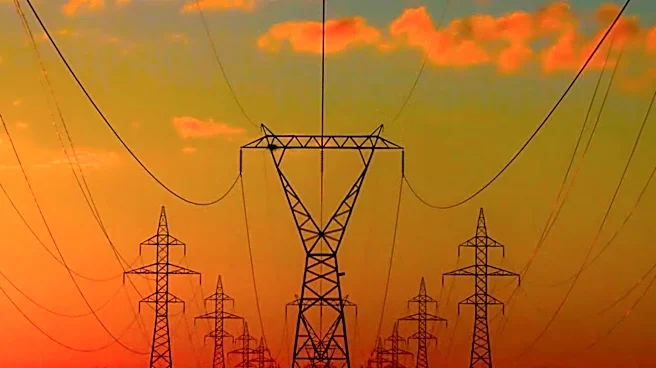
Jon Wellinghoff, former chair of the Federal Energy Regulatory Commission (FERC), has issued a stark warning regarding the vulnerability of the U.S. power grid. According to Wellinghoff, an analysis conducted by FERC determined that disabling just nine
critical substations across the country's three regional interconnections (Western, Eastern, and Texas) could lead to a nationwide power failure lasting up to 18 months. This concern is amplified by recent events, including a prolonged power outage in Gary, Indiana, where thousands of residents were without electricity for over a week following severe storms. The incident in Indiana highlighted the fragility of local electric networks and the challenges of repairing outdated infrastructure, with utility crews having to rebuild entire power lines and replace numerous poles and transmission structures. Wellinghoff first raised this alarm in 2013 after an attack on an electrical substation near San Jose, California, where gunmen shot 17 transformers.
Why It's Important?
The potential for an 18-month nationwide blackout underscores a critical national security and economic vulnerability. Such an event would cripple essential services, including clean water supply, communication networks, banking systems, and fuel distribution, leading to widespread societal disruption. The reliance on aging infrastructure, with over 75% of distribution transformers exceeding their 50-year life expectancy, exacerbates this risk. Furthermore, the extended lead times for replacing large power transformers—now averaging 128 weeks compared to less than a year previously—mean that recovery from a major incident would be significantly delayed. This situation highlights the urgent need for substantial investment in modernizing the U.S. power grid and strengthening its physical security to prevent catastrophic failures and ensure national resilience.
What's Next?
Utilities are actively working to enhance physical security and modernize transmission hardware to mitigate these risks. Federal regulations, such as the NERC CIP-014 standard, mandate physical protection at high-voltage substations, requiring independent risk reviews, perimeter fencing, smart camera surveillance, and coordination with local law enforcement. However, the scale of the problem necessitates significant and sustained investment. Experts estimate that the U.S. will need to spend as much on grid modernization in the next 15 years as it has over the past 150 years. The ongoing challenges, including the rapid growth of AI data centers and factory electrification, are placing unprecedented strain on the grid, pushing it to its limits during extreme weather events. Continued efforts will focus on upgrading infrastructure, improving supply chain resilience for critical components, and implementing robust security measures.
Beyond the Headlines
The vulnerability of the U.S. power grid extends beyond physical attacks and extreme weather; it also touches upon the nation's industrial capacity and global supply chain dependencies. The fact that only 20% of transformers needed in the U.S. are domestically produced, coupled with long lead times for critical components from foreign suppliers, reveals a strategic weakness. This reliance on external sources for essential infrastructure components could severely hamper recovery efforts in the event of a widespread outage. The issue also raises questions about the balance between economic efficiency and national security, as the drive for cost-effective solutions has historically led to outsourcing and a reduction in domestic manufacturing capabilities. Addressing these deeper implications will require a comprehensive national strategy that prioritizes domestic production, strengthens supply chains, and fosters innovation in grid technology.