





What's Happening?
Researchers at Kyushu University have published a study in Science Advances that challenges the long-held theory of synaptic pruning during adolescence. Traditionally, adolescence is seen as a period when the brain refines its neural circuits by trimming
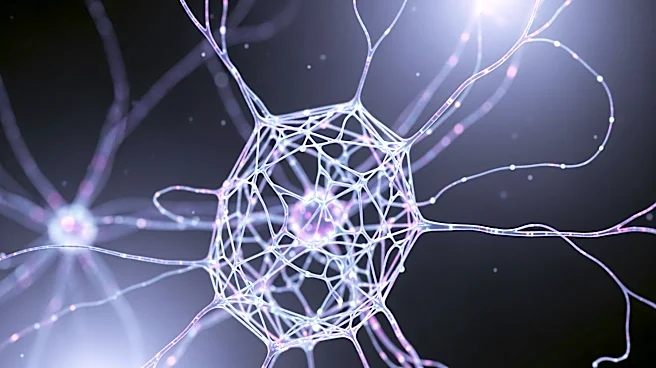
excess synapses. However, the new study suggests that the adolescent brain also builds dense clusters of synapses on specific dendrites, contradicting the idea that adolescence is primarily about cutting connections. The research team, led by Professor Takeshi Imai, used advanced microscopy techniques to map synaptic structures in the mouse cerebral cortex, revealing high-density hotspots of dendritic spines that emerge during adolescence. This discovery suggests that synapse formation, rather than just pruning, plays a crucial role in adolescent brain development.
Why It's Important?
The findings from Kyushu University have significant implications for understanding neuropsychiatric disorders such as schizophrenia, which has been linked to excessive synaptic pruning. The study suggests that impaired synapse formation during adolescence may be a key factor in the development of such disorders. This challenges the traditional view and opens new avenues for research into the mechanisms underlying schizophrenia and other neuropsychiatric conditions. By identifying the specific brain regions and circuits involved in synapse formation during adolescence, researchers can better understand the developmental processes that contribute to mental health disorders, potentially leading to improved diagnostic and therapeutic strategies.
What's Next?
The research team plans to further investigate which brain regions are forming new synaptic connections during adolescence. This will help identify the circuits being built during this developmental period and advance the understanding of brain development and neuropsychiatric disorders. Future studies may explore whether similar synaptic formation processes occur in primates and humans, providing insights into human brain development. Additionally, the team aims to examine the impact of genetic mutations linked to schizophrenia on synapse formation, which could lead to new approaches in treating or preventing the disorder.
Beyond the Headlines
The study highlights the complexity of brain development and the need to reconsider established theories. It underscores the importance of synapse formation in adolescent brain maturation, suggesting that both pruning and formation are crucial for healthy development. This research may prompt a reevaluation of how neuropsychiatric disorders are understood and treated, emphasizing the need for a more nuanced approach that considers the balance between synapse formation and pruning. The findings also raise ethical considerations regarding genetic research and its implications for mental health treatment.