
What's Happening?
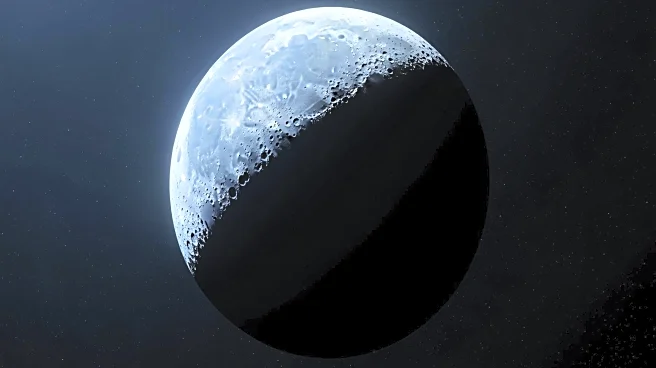
On February 9, 2026, the Moon reaches its Last Quarter phase, a period favored by astronomers for observation due to the unique lighting conditions. This phase occurs at 7:43 A.M. EST, making it ideal for early-morning viewing. The Moon will be positioned
high in the southern sky, amidst the stars of Libra, and will move into Scorpius by the following day. Observers can enjoy views of the Apennine Mountains and the Copernicus crater, which are visible due to the sunlight illuminating the lunar surface. The Moon will also reach apogee, its farthest point from Earth, at 11:52 A.M. EST, being 251,392 miles away.
Why It's Important?
The Last Quarter Moon offers a unique opportunity for astronomers and enthusiasts to observe lunar features with enhanced clarity. The lighting conditions during this phase allow for detailed views of the Moon's surface, including craters and mountain ranges. This event is significant for educational purposes and for those interested in astrophotography, as it provides a chance to capture the Moon's features in high detail. Additionally, the Moon's apogee presents an interesting aspect for those studying lunar orbit dynamics.
What's Next?
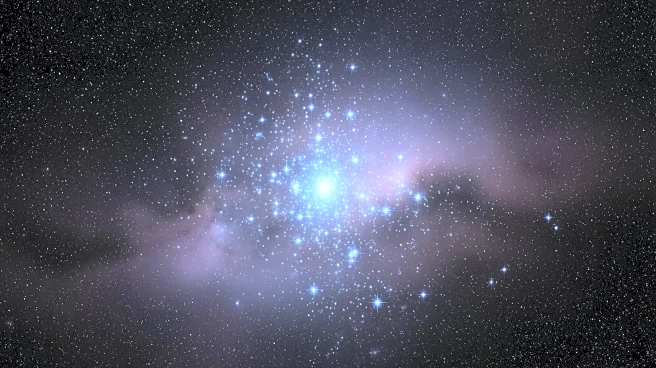
Following the Last Quarter phase, the Moon will continue its journey across the sky, moving into Scorpius and approaching the bright star Antares. Observers can look forward to viewing the Moon's proximity to other celestial objects, such as the globular cluster NGC 6144 near Antares. This progression offers further opportunities for observation and study, particularly for those interested in the interactions between the Moon and other astronomical bodies.
Beyond the Headlines
The Last Quarter Moon phase not only provides observational opportunities but also serves as a reminder of the intricate dynamics of celestial movements. The Moon's apogee highlights the elliptical nature of its orbit, which can influence tidal patterns on Earth. Understanding these dynamics is crucial for both scientific research and practical applications, such as navigation and climate studies.