






What's Happening?
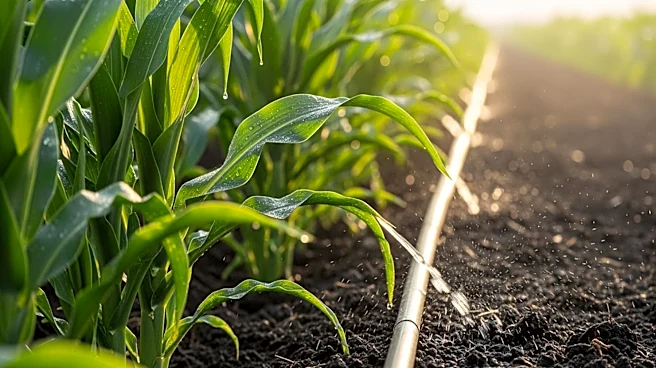
Researchers at the University of Missouri have developed a new irrigation method that significantly reduces water usage in sweet corn farming while maintaining crop quality. The study, conducted by the university's agriculture and engineering programs,
tested three different irrigation systems to determine the most efficient way to water sweet corn. The first method relied solely on rainfall, resulting in the lowest yields. The second method used weather conditions to estimate water needs, often leading to over-irrigation. The third and most effective method employed crop-specific evapotranspiration, which measures the exact water requirements of sweet corn at various growth stages. This targeted approach minimized unnecessary water use and maintained the quality of the crop, including its sugar content, which is a key quality indicator. The findings suggest that farmers can conserve water without compromising the quality of sweet corn, a major vegetable crop in the U.S. that contributes billions to the economy.
Why It's Important?
The development of a more efficient irrigation method for sweet corn is significant for several reasons. Firstly, it addresses the critical issue of water conservation in agriculture, a sector that consumes a substantial portion of the world's freshwater resources. By reducing water usage, this method can help mitigate the environmental impact of farming and promote sustainable agricultural practices. Additionally, sweet corn is a major crop in the United States, and improving its production efficiency can have substantial economic benefits. Farmers can lower their irrigation costs, potentially increasing their profit margins. Moreover, maintaining the quality of sweet corn ensures that consumer expectations are met, which is crucial for market stability. This research could serve as a model for other crops, further enhancing the sustainability of the agricultural industry.
What's Next?
The next steps following this research involve broader implementation and testing of the irrigation method across different regions and climates to validate its effectiveness on a larger scale. Farmers and agricultural stakeholders may begin adopting this method to improve water efficiency in sweet corn production. Additionally, further research could explore the application of this irrigation strategy to other crops, potentially revolutionizing water management practices in agriculture. Policymakers and agricultural organizations might also consider promoting this method as part of sustainability initiatives, providing support and resources to farmers transitioning to more efficient irrigation systems.