






What's Happening?
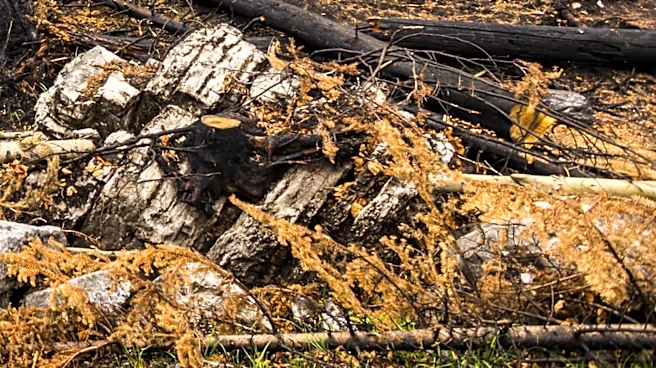
A wind-driven wildfire, named the Mukluk Fire, erupted in Tok, Interior Alaska, on Monday, damaging or destroying at least 20 structures. The fire, believed to have started from a downed power line, rapidly expanded from a half-acre to over 1,500 acres
within hours, pushed by southwest winds towards the Tanana River. By early Wednesday morning, the fire was estimated to be over 5,000 acres. Scores of residents were evacuated, with some losing their homes and belongings. Despite Alaska experiencing a relatively moderate fire season, this blaze has necessitated the recall of air tankers and wildland crews from the Lower 48, where they were assisting with an overwhelming fire season. Governor Mike Dunleavy has verbally declared a state disaster emergency for the Alaska Gateway area, including Tok, and FEMA has approved a declaration for fire suppression cost reimbursement.
Why It's Important?
This wildfire highlights the increasing vulnerability of communities to extreme weather events, even in regions typically less affected by widespread blazes. The rapid growth and destructive impact of the Mukluk Fire underscore the challenges faced by emergency services in containing fast-moving, wind-driven fires. The need to recall resources from the Lower 48 demonstrates the interconnectedness of national wildfire response efforts and the strain placed on these resources during severe fire seasons across multiple states. The state and federal disaster declarations are crucial for providing immediate relief and long-term recovery support to affected residents, emphasizing the economic and social costs associated with such disasters. This event also brings attention to the potential for power infrastructure to ignite wildfires, a growing concern in many fire-prone areas.
What's Next?
As of Wednesday morning, the Mukluk Fire was 16% contained along its perimeter within the community of Tok, with nearly 170 firefighters, three air tankers, two water scooping aircraft, and five helicopters assigned to the incident. Evacuations remain in place for areas north of the Alaska Highway, and authorities are warning against entering the fire zone due to hazards like downed power lines and hidden ash pits. The state disaster emergency declaration will facilitate public and individual assistance programs, while FEMA's approval will help reimburse the state for suppression costs. Community efforts are underway to support evacuees, though officials are requesting that large donations be held off to avoid overwhelming the small community. The focus will remain on containment, ensuring public safety, and beginning the recovery process for those who lost homes and businesses.
Beyond the Headlines
The Mukluk Fire in Tok, while a localized event, reflects broader environmental and societal shifts. The mention of Alaska's otherwise moderate fire season contrasting with the Lower 48's overwhelming one points to the complex and varied impacts of climate patterns across different regions. The incident also brings to light the critical role of community resilience and mutual aid, as neighbors and volunteers step up to support those displaced. The issue of drones interfering with firefighting efforts, leading to the grounding of essential aircraft, underscores the growing challenge of managing airspace during emergencies and the potential for civilian actions to impede critical response operations. This event serves as a stark reminder of the unpredictable nature of wildfires and the continuous need for preparedness, resource allocation, and public cooperation in mitigating their devastating effects.