






What's Happening?
The United States is grappling with a potential fuel crisis as global oil shortages intensify, driven by the ongoing conflict in Iran and the closure of the Strait of Hormuz. This has led to a significant reduction in global oil supply, estimated at around
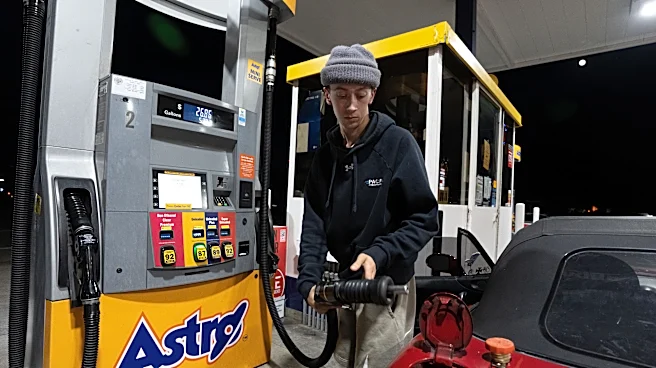
13 million barrels per day, or 10% of global demand. As a result, oil prices have surged, with Brent crude reaching $126 a barrel and West Texas Intermediate crude hitting $110 a barrel. The U.S. has been exporting petroleum to meet global demand, but is projected to run out of buffer oil stores in about eight weeks. California, in particular, is experiencing severe fuel shortages, with prices reaching $6 per gallon due to reduced imports and increased exports to Asia. The unique fuel blend used in California, CARBOB, is facing supply issues due to refinery outages, further exacerbating the situation.
Why It's Important?
The escalating oil crisis has significant implications for the U.S. economy and global markets. The shortage is likely to lead to increased fuel prices, affecting transportation costs and potentially leading to inflationary pressures. The aviation industry is particularly vulnerable, with potential flight cancellations due to soaring jet fuel prices. The U.S. has been a key supplier of petroleum to the global market, but as its reserves dwindle, it may face domestic shortages, prompting potential policy responses such as export bans. The situation underscores the vulnerability of global supply chains to geopolitical tensions and highlights the need for strategic energy reserves and alternative energy sources.
What's Next?
In the coming weeks, the U.S. may face increased domestic pressure to conserve fuel supplies, potentially leading to policy measures such as export restrictions. As global oil prices continue to rise, there may be increased calls for international cooperation to stabilize markets. The situation could also accelerate the transition to renewable energy sources as countries seek to reduce dependence on volatile oil markets. Additionally, the U.S. may need to engage in diplomatic efforts to address the geopolitical tensions contributing to the crisis, particularly in the Middle East.
Beyond the Headlines
The current oil crisis highlights the broader challenges of energy security and the geopolitical risks associated with reliance on fossil fuels. It raises ethical questions about the balance between domestic needs and global responsibilities, particularly in times of crisis. The situation may also prompt a reevaluation of energy policies and investment in sustainable energy infrastructure. Long-term, the crisis could lead to shifts in global energy markets, with countries seeking to diversify their energy sources and reduce reliance on oil imports.