
What's Happening?
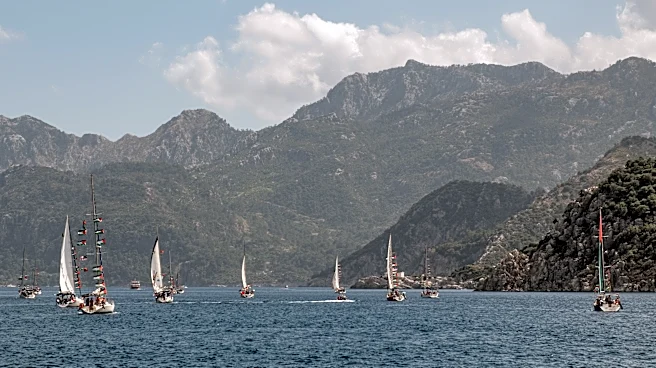
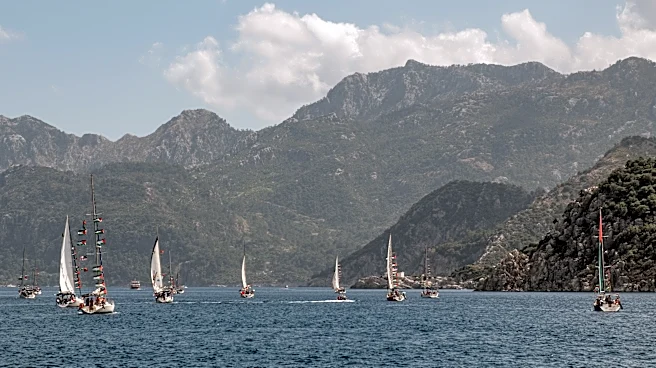
At least 87 activists from a Gaza aid flotilla have been detained by Israeli forces, prompting a hunger strike among the detainees. The flotilla, consisting of over 50 vessels, aimed to break Israel's
blockade of the Gaza Strip. The activists, hailing from various countries including Indonesia, Ireland, and South Korea, were intercepted in international waters. The incident has sparked international condemnation, with several countries summoning Israeli ambassadors to express their indignation. The activists are protesting their detention and expressing solidarity with Palestinian prisoners in Israel. The situation has drawn widespread criticism, with accusations of violations of international law.
Why It's Important?
The detention of the Gaza aid flotilla activists highlights ongoing tensions surrounding the Israeli blockade of Gaza and the international community's response to humanitarian efforts in the region. The incident underscores the complex geopolitical dynamics at play, involving multiple countries and international law. The global outcry reflects broader concerns about human rights and the treatment of activists. This development could strain Israel's diplomatic relations with several countries and impact its international standing. The situation also raises questions about the effectiveness and ethics of blockades as a tool of foreign policy.
What's Next?
The immediate focus will be on diplomatic efforts to secure the release of the detained activists. Countries with citizens among the detainees are likely to intensify diplomatic pressure on Israel. The hunger strike by the activists could draw further international attention and increase pressure on Israel to address the situation. The incident may also prompt discussions within international bodies about the legality and humanitarian implications of blockades. Israel's response to the international criticism and its handling of the detainees will be closely watched by the global community.