








What's Happening?
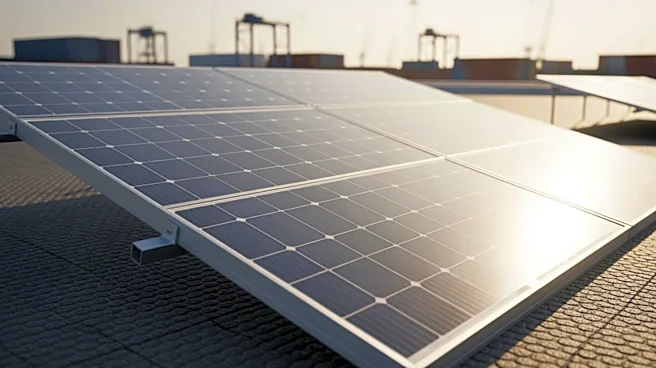
China's recent decision to scale back export tax rebates for solar and battery products is leading to higher installation costs in the UK energy market. As of April 1, 2026, China ended export VAT rebates on photovoltaic products and reduced battery export rebates,
with plans to remove them entirely by 2027. This policy change has resulted in a 12% increase in average solar installation costs in the UK. The UK's reliance on Chinese-made components is directly impacting household costs, as these additional expenses are incorporated into the prices quoted for solar and battery systems. The situation raises concerns about the UK's clean energy future, as it highlights the risks of dependency on overseas supply chains and policy changes.
Why It's Important?
The increase in solar installation costs due to China's export policy underscores the vulnerability of the UK's renewable energy sector to international supply chain disruptions. As China dominates the global solar industry, accounting for a significant portion of the manufacturing supply chain, changes in its export policies can have widespread implications. The higher costs could slow the UK's progress toward its net-zero goals, as households face increased financial barriers to adopting clean energy solutions. This situation emphasizes the need for the UK government to strengthen domestic production capabilities and reduce reliance on foreign components to ensure energy security and sustainability.
What's Next?
The UK government is investing in solar power across homes, schools, and communities to mitigate the impact of rising costs and support its clean power ambitions. Initiatives include the development of the Springwell Solar Farm and the rollout of 'plug-in' solar panels. The government is also providing additional funding for solar installations in social housing. These efforts aim to boost solar capacity and reduce energy costs for households. However, the UK must continue to explore strategies to diversify its supply chains and enhance domestic manufacturing to safeguard its renewable energy future.