






What's Happening?
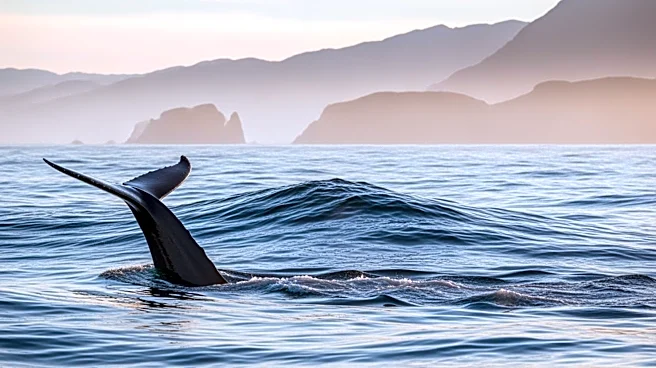
Conservationists in Argentina's southern Chubut Province have captured rare footage of a blue whale in the Patagonia Azul Provincial Park. This sighting is significant as it marks the first time a blue whale has been documented in this region, providing
crucial evidence of their presence in an area where they were previously unobserved. The team, initially conducting a study on humpback and sei whales, was surprised to encounter the blue whale, which is known as the largest animal on Earth. The researchers were able to photograph the whale, contributing valuable data to marine conservation efforts. This discovery underscores the importance of the Patagonia Azul Provincial Park as a critical area for marine life conservation.
Why It's Important?
The sighting of a blue whale in Patagonia Azul is a significant development for marine conservation, highlighting the park's role in protecting endangered species. Blue whales are classified as endangered and face numerous threats, including ship strikes, climate change, and pollution. The presence of a blue whale in this region suggests that the park may serve as a vital habitat for these creatures, emphasizing the need for continued conservation efforts. The documentation of this sighting provides valuable data that can be used to enhance protection measures and ensure the survival of blue whales in their natural environment. This event also raises awareness about the challenges faced by marine life and the importance of preserving biodiversity.
What's Next?
Following this discovery, conservationists are likely to intensify efforts to monitor and protect blue whales in the Patagonia Azul Provincial Park. This may involve increased research activities to better understand the distribution and behavior of blue whales in the region. Additionally, there may be calls for the establishment of protected marine corridors to safeguard these animals from threats such as ship traffic and fishing gear entanglement. Efforts to reduce ocean noise and minimize human impact on key whale habitats could also be prioritized. The data collected from this sighting will be crucial in informing future conservation strategies and ensuring the long-term survival of blue whales.
Beyond the Headlines
The sighting of a blue whale in Patagonia Azul has broader implications for marine conservation and environmental policy. It highlights the interconnectedness of global ecosystems and the need for international cooperation in protecting migratory species like the blue whale. This event may prompt discussions on the effectiveness of current conservation policies and the need for more comprehensive measures to address the threats faced by marine life. Additionally, it underscores the importance of preserving natural habitats and the role of protected areas in maintaining biodiversity. The discovery also serves as a reminder of the impact of human activities on the environment and the urgent need for sustainable practices.