







What's Happening?
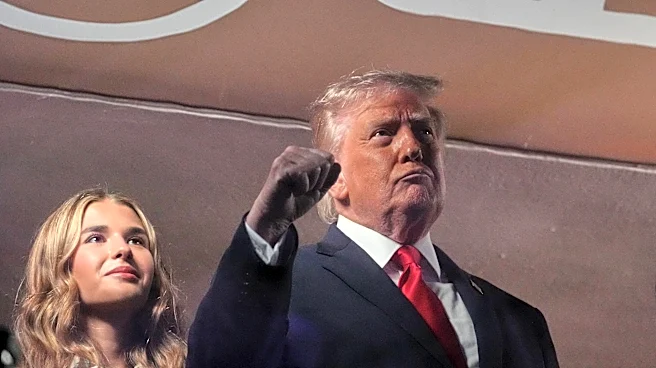
President Trump has signed a significant $70 billion bill into law, aimed at funding the Department of Homeland Security's immigration enforcement agencies. This move concludes a prolonged dispute that highlighted deep divisions within Capitol Hill. The
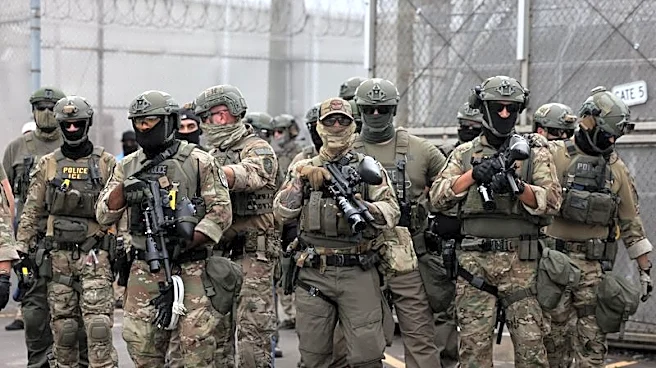
Secure America Act, as it is called, ensures full funding for the Department of Homeland Security through the end of Trump's term. The House narrowly approved the funding package with a 214 to 212 vote, following the Senate's approval after an extensive voting session. The bill provides resources for Immigration and Customs Enforcement (ICE) and parts of Customs and Border Protection, despite months of Democratic resistance demanding reforms. The legislation also includes funding for domestic law enforcement investigations and efforts to combat child exploitation.
Why It's Important?
The signing of this bill is a critical development in U.S. immigration policy, as it secures funding for key enforcement agencies amid ongoing debates about immigration reform. The decision underscores the administration's commitment to maintaining robust border security and law enforcement operations. For the Trump administration, this represents a legislative victory, particularly in the face of Democratic opposition. The funding ensures that ICE and Border Patrol have the necessary resources to continue their operations, which are central to the administration's immigration agenda. This development may also influence future legislative negotiations, as it demonstrates the administration's ability to navigate complex political landscapes to achieve its policy goals.
What's Next?
With the bill now signed into law, the focus may shift to how the allocated funds will be utilized by the Department of Homeland Security. The administration will likely continue to emphasize border security and enforcement, potentially leading to further policy initiatives or adjustments. Additionally, the political dynamics surrounding immigration policy could evolve, as both parties assess the implications of this funding decision. Stakeholders, including immigration advocacy groups and political leaders, may respond with renewed calls for comprehensive immigration reform, highlighting the ongoing debate over the balance between enforcement and humanitarian considerations.