


What's Happening?
Recent military actions in the Middle East, specifically U.S. and Israeli strikes on Iran, have led to a significant increase in oil prices. Brent crude has surged to $79.40 per barrel, marking a 9.3% rise. The conflict has resulted in the death of Iran's
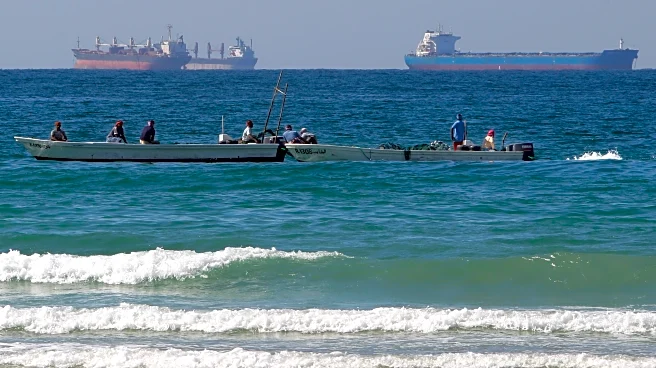
Supreme Leader Ayatollah Ali Khamenei, prompting retaliatory attacks by Iran on U.S. military bases in the region. This escalation has caused disruptions in oil traffic through the Strait of Hormuz, a critical passage for global oil supplies. The halt in oil traffic is due to increased insurance rates following the attacks, further pushing up oil prices. The situation is particularly concerning for countries like India, which imports a significant portion of its crude oil through this route.
Why It's Important?
The spike in oil prices has broad implications for global economies, particularly those heavily reliant on oil imports. For the U.S., higher oil prices could lead to increased costs for consumers and businesses, potentially affecting inflation rates and economic growth. The disruption in the Strait of Hormuz, a vital artery for oil transportation, underscores the vulnerability of global supply chains to geopolitical tensions. Countries like India, which depend on oil imports for their energy needs, face increased economic pressure, potentially affecting their GDP growth and currency stability. The situation also highlights the interconnectedness of global markets and the potential for regional conflicts to have far-reaching economic impacts.
What's Next?
As tensions in the Middle East continue, the global community will be closely monitoring the situation for further developments. Countries affected by the oil price surge may seek alternative energy sources or negotiate new trade agreements to mitigate the impact. The U.S. and other nations may also engage in diplomatic efforts to de-escalate the conflict and stabilize oil markets. Additionally, businesses and consumers may need to brace for potential increases in energy costs and related goods, as the ripple effects of the conflict continue to unfold.