





What's Happening?
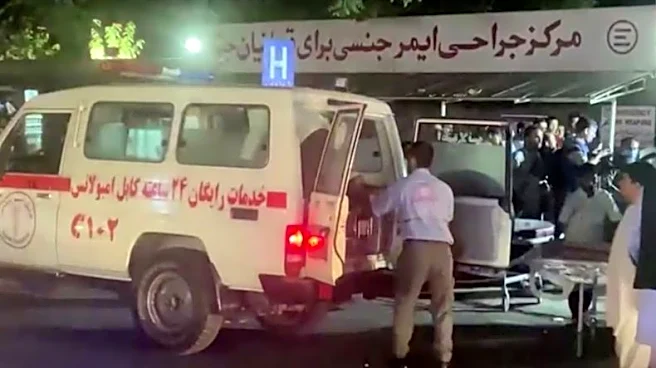
Mohammad Sharifullah, an alleged Islamic State group militant, was convicted of conspiracy in a deadly suicide bombing at Kabul airport during the U.S. military's withdrawal from Afghanistan in 2021. The attack resulted in the deaths of approximately
160 Afghans and 13 U.S. service members. Sharifullah faces a maximum sentence of 20 years in prison following his conviction in an international terrorism case. The jury, however, did not reach a consensus on whether the deaths directly resulted from his conspiracy, which could have led to a life sentence. The case was highlighted by President Trump in a speech to Congress, emphasizing its significance. Sharifullah did not testify during his trial, and his defense argued that the prosecution failed to provide evidence linking him to the bombing beyond his statements during FBI questioning.
Why It's Important?
The conviction of Mohammad Sharifullah underscores the ongoing challenges in prosecuting international terrorism cases, particularly those linked to high-profile attacks. The case highlights the complexities of gathering evidence and securing convictions in incidents involving multiple jurisdictions and international actors. The outcome is significant for the Justice Department, as it reflects the difficulties in holding individuals accountable for large-scale attacks. The case also draws attention to the broader implications of the U.S. withdrawal from Afghanistan and the security vacuum it created, which has been exploited by terrorist groups like ISIS-K. The verdict may influence future counterterrorism strategies and the handling of similar cases.
What's Next?
Sharifullah's sentencing date has not been set, and the case may prompt further legal and political discussions regarding the handling of international terrorism suspects. The Justice Department may face pressure to reassess its strategies in prosecuting such cases, especially given the jury's deadlock on the direct responsibility for the deaths. The case could also impact U.S. foreign policy and military strategies in regions affected by terrorism, as well as the ongoing efforts to combat ISIS-K and similar groups. Additionally, the verdict may influence public and political discourse on the effectiveness of the U.S. justice system in addressing international terrorism.