
What's Happening?
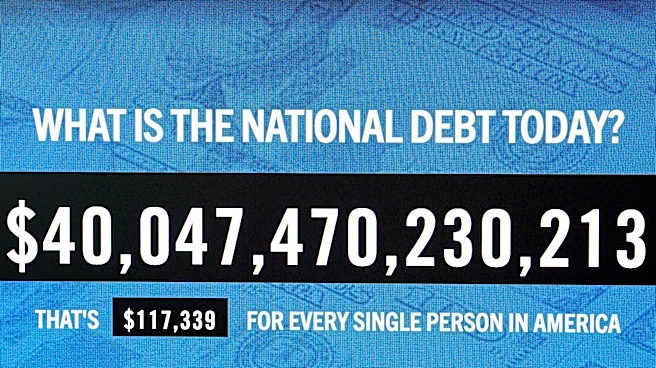
The United States national debt has reached $40 trillion, a milestone that is causing alarm regarding the country's financial stability. This significant increase in debt is attributed to various factors,
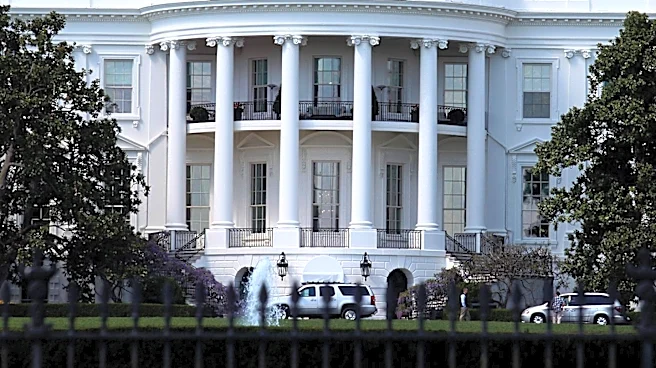
including Social Security, Medicare, Medicaid, post-9/11 wars, economic recoveries, and pandemic emergencies, with revenues consistently falling short of annual budget deficits. President Trump did not comment on this debt milestone, instead focusing on White House construction projects, including a helipad and ballroom, which are reported to cost at least $900 million, primarily covered by taxpayers. This ballooning debt follows President Trump's initial move after returning to the White House, which involved granting unprecedented power to an unelected Elon Musk and the newly created Department of Government Efficiency (DOGE). Musk had initially claimed that DOGE staffers would save $2 trillion by rooting out government waste, a claim that did not materialize. DOGE's operations led to mass firings, resignations, and chaos within government agencies, shuttering programs and becoming a source of bureaucracy itself.
Why It's Important?
The U.S. national debt reaching $40 trillion is a critical indicator of the nation's fiscal health, with significant implications for future generations and the broader economy. Such a high level of debt can lead to increased borrowing costs, potential inflation, and reduced government flexibility to respond to future crises. It also raises concerns about the long-term sustainability of social programs like Social Security and Medicare. The actions of the Department of Government Efficiency (DOGE), under Elon Musk, highlight the challenges and potential pitfalls of attempting to streamline government operations without proper oversight and understanding of complex bureaucratic structures. The failure of DOGE to achieve its stated goal of saving $2 trillion, coupled with its disruptive impact on government agencies, underscores the importance of experienced leadership and careful planning in public administration. The reported taxpayer funding of White House construction projects amidst rising national debt further fuels public debate about fiscal responsibility and government spending priorities, potentially impacting public trust in government and influencing future election cycles.
What's Next?
The continued growth of the national debt will likely intensify calls for fiscal reform and more disciplined government spending. This could lead to renewed debates in Congress about budget allocations, tax policies, and the future of entitlement programs. Political leaders will face increasing pressure to address the debt, potentially through a combination of spending cuts, revenue increases, or economic growth initiatives. The legacy of the Department of Government Efficiency (DOGE) and its impact on government agencies may lead to a re-evaluation of how efficiency initiatives are conceived and implemented in the future, emphasizing the need for careful planning and accountability. Public discourse around government spending and the national debt is expected to remain a prominent issue, especially as the country approaches future election cycles. The reported costs of White House construction projects could also become a point of contention, potentially influencing public perception of government priorities and fiscal management.
Beyond the Headlines
The $40 trillion national debt reflects a deeper, systemic challenge in U.S. fiscal policy, where short-term political considerations often outweigh long-term financial sustainability. This trend can erode intergenerational equity, as future generations will bear the burden of current spending. The episode with the Department of Government Efficiency (DOGE) also highlights the complex interplay between private sector approaches and public sector governance. While the private sector often champions efficiency, applying these principles to government without a nuanced understanding of public service, regulatory functions, and social safety nets can lead to unintended consequences, including chaos and a decline in essential services. The public's perception of government waste, exacerbated by such initiatives, can further deepen cynicism towards public institutions. This situation underscores the need for a more holistic and bipartisan approach to fiscal responsibility, one that balances economic growth, social welfare, and long-term financial health, rather than relying on simplistic solutions or politically motivated interventions.