







What's Happening?
The U.S. Department of Agriculture's (USDA) Agricultural Research Service (ARS) is offering a research fellowship in precision aquaculture at its facility in Shepherdstown, West Virginia. This opportunity is part of the ARS's mission to develop scientific
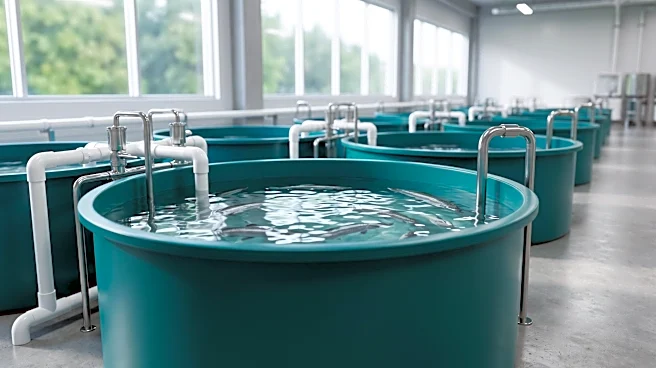
tools and innovative solutions for agricultural problems. The fellowship focuses on the 'Innovating New Technologies that Improve Efficiencies of Recirculating Aquaculture Systems' cooperative research project. The selected fellow will investigate the use of multispectral and hyperspectral imaging, olfactory sensing, and artificial intelligence (AI) to monitor fish health and welfare in recirculating aquaculture systems (RAS). This involves integrating sensors, developing prototypes for data collection in challenging aquaculture environments, assisting in creating AI-driven data processing pipelines, and supporting the development of decision-support tools and robotic solutions for RAS. The appointment is full-time, initially for one year with potential for renewal, and offers a monthly stipend commensurate with educational level and experience, ranging from $75,000 to $82,000 annually, plus a health insurance supplement. Applicants must be U.S. citizens.
Why It's Important?
This research fellowship is important for advancing the sustainability and economic viability of recirculating aquaculture systems (RAS) in the U.S. aquaculture industry. By focusing on precision aquaculture technologies like AI, multispectral imaging, and olfactory sensing, the USDA ARS aims to enhance fish health and welfare monitoring, which can lead to more efficient and productive aquaculture operations. Improved RAS technologies can reduce environmental impact, optimize resource utilization, and increase the domestic supply of seafood, contributing to food security and economic competitiveness. The development of decision-support tools and robotic solutions can also streamline operations, potentially lowering labor costs and improving overall farm management. This initiative supports American farmers, producers, and industry by providing cutting-edge solutions that address agricultural challenges from a scientific perspective, ultimately benefiting consumers through a more reliable and sustainable food supply chain. The investment in such research underscores a commitment to agricultural innovation and leadership in global discoveries.
What's Next?
The application process for the precision aquaculture research fellowship is on a rolling basis, with an anticipated start date in 2026, which is flexible depending on various factors. The selected fellow will begin contributing to the 'Innovating New Technologies that Improve Efficiencies of Recirculating Aquaculture Systems' project. This will involve hands-on work in developing, integrating, and validating sensor systems and prototype devices for imaging and chemical sensing in aquaculture. The research will also focus on building skills in artificial intelligence, machine learning, and computer vision to create tools for monitoring fish health and welfare. The fellow will gain experience in experimental design, data collection, analysis, and interpretation, and will be expected to enhance scientific communication through technical reports, peer-reviewed publications, conference presentations, and collaborations with industry partners. The outcomes of this research are expected to inform future advancements in RAS technology and contribute to the broader goals of the USDA ARS in supporting sustainable agriculture.
Beyond the Headlines
Beyond the immediate scientific advancements, this fellowship highlights a broader trend towards integrating advanced technologies like artificial intelligence and sophisticated sensing into traditional agricultural practices. The focus on precision aquaculture reflects a strategic shift to address complex challenges in food production, such as environmental sustainability, resource efficiency, and disease management, through data-driven approaches. This initiative could set a precedent for how other agricultural sectors adopt similar high-tech solutions, potentially leading to a more resilient and technologically advanced U.S. agricultural landscape. The emphasis on open-access publication of findings by the TCF Freshwater Institute, a partner in this research, suggests a commitment to knowledge sharing that can accelerate industry-wide adoption of these innovations. Furthermore, by fostering expertise in these specialized fields, the USDA is investing in the next generation of agricultural scientists and engineers, ensuring continued leadership in agricultural discoveries and food security.