







What's Happening?
Langkawi, known as the 'Jewel of Kedah,' is a prominent island destination in Malaysia, recognized as a UNESCO World Heritage Site. Located on the North East Coast of Peninsular Malaysia, near Thailand, it is accessible via Langkawi International Airport
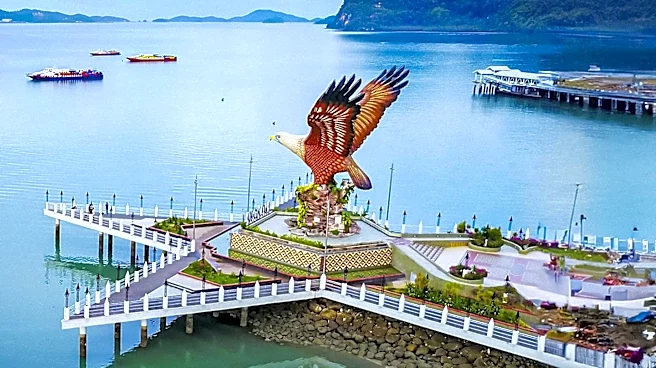
(LGK). Malaysia Airlines offers direct, nonstop flights from Kuala Lumpur (KUL) to Langkawi up to five times daily, with a flight duration of approximately 1 hour and 5 minutes to 1 hour and 15 minutes. The island is celebrated for its picturesque landscapes, crystal-clear waters, and vibrant markets. Popular attractions include the Langkawi Sky Bridge, Underwater World Langkawi, and the eagle statue at Dataran Lang. Visitors can explore lush jungles, observe wildlife, and enjoy diverse dining options at local pubs and night markets. The island also offers duty-free shopping.
Why It's Important?
Langkawi's status as a UNESCO World Heritage Site underscores its ecological and cultural significance, attracting international tourism and contributing to Malaysia's economy. The frequent flight connections from Kuala Lumpur highlight its importance as a key tourist hub, facilitating both domestic and international travel. The island's diverse attractions, from natural wonders like its jungles and beaches to man-made sites such as the Sky Bridge and Underwater World, cater to a wide range of visitors, boosting the local hospitality and retail sectors. Its duty-free status further enhances its appeal as a shopping destination, providing economic benefits to local businesses and the broader Malaysian tourism industry. The continuous influx of tourists supports employment and infrastructure development on the island.
What's Next?
Langkawi is expected to continue its growth as a premier tourist destination, with ongoing efforts to promote its natural beauty and cultural heritage. The consistent flight schedule from Kuala Lumpur suggests sustained accessibility for travelers. Future developments may focus on enhancing tourist infrastructure, such as accommodations and transportation, to manage increasing visitor numbers. Conservation efforts, particularly given its UNESCO status, will likely remain a priority to preserve its unique ecosystems. The island may also see further diversification of its tourism offerings, potentially including more eco-tourism and adventure activities, to attract a broader demographic of travelers and ensure its long-term appeal.
Beyond the Headlines
Beyond its immediate appeal as a tourist hotspot, Langkawi represents a successful model of sustainable tourism development, balancing economic growth with environmental preservation due to its UNESCO designation. The island's strategic location near Thailand also positions it as a potential gateway for regional tourism, fostering cross-border travel and cultural exchange. The emphasis on duty-free shopping not only boosts retail but also creates a unique economic niche. Furthermore, the blend of natural attractions and modern amenities reflects a broader trend in tourism where destinations strive to offer diverse experiences, from serene nature escapes to vibrant urban-like entertainment, catering to evolving traveler preferences and contributing to a more robust and resilient tourism economy.