



What's Happening?
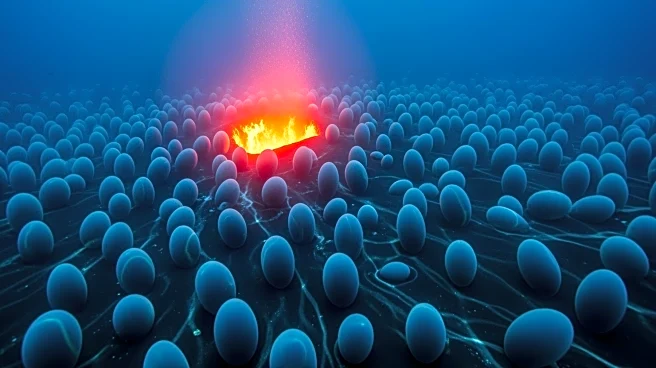
During a deep-sea expedition off the coast of Vancouver Island, scientists discovered a vast field of giant egg cases on the slopes of an underwater volcano. The expedition, led by Fisheries and Oceans Canada, initially aimed to map an inactive seamount
but instead found a thriving marine ecosystem. The volcano, which rises over a kilometer above the seabed, is home to hundreds of thousands, possibly up to a million, egg cases of the Pacific white skate. These egg cases, often referred to as 'mermaid's purses,' are incubated by the heat from volcanic vents, providing a unique environment for the skates to develop. The discovery highlights the volcano's role as a natural incubator, where the warmth accelerates the development of the skates, which typically occurs in near-total darkness and cold temperatures.
Why It's Important?
This discovery is significant as it provides insight into how geological features can directly influence biological processes. The presence of such a large number of egg cases suggests that volcanic zones may play a crucial role in the life cycles of deep-sea species. The finding also underscores the importance of protecting these fragile ecosystems, which are increasingly threatened by climate change and deep-sea mining. The ability of the skates to utilize the volcanic heat for incubation could represent an evolutionary advantage, offering a glimpse into how species adapt to extreme environments. This discovery could lead to further exploration of other volcanic zones, potentially uncovering more about the biodiversity of the deep sea.
What's Next?
The discovery has prompted calls for increased protection of deep-sea ecosystems, particularly those around volcanic zones. Conservationists are urging governments to implement measures to safeguard these areas from the impacts of climate change and industrial activities. Further research is likely to focus on understanding the full extent of the ecosystem supported by the volcano and the potential for similar discoveries in other unexplored regions. Scientists may also investigate the long-term implications of volcanic heat on the development and survival of deep-sea species.
Beyond the Headlines
The discovery raises questions about the balance between conservation and exploitation of deep-sea resources. While the volcanic zones offer a unique habitat for marine life, they are also potential targets for resource extraction. This duality highlights the need for sustainable management practices that protect biodiversity while considering economic interests. The finding also contributes to the broader understanding of how life can thrive in extreme environments, offering parallels to other planetary bodies where similar conditions might exist.