




What's Happening?
Zeno Power, a startup specializing in nuclear batteries, has successfully demonstrated an electrically heated Stirling generator in a controlled maritime environment in Washington state. This two-week test produced electrical power outputs exceeding 20
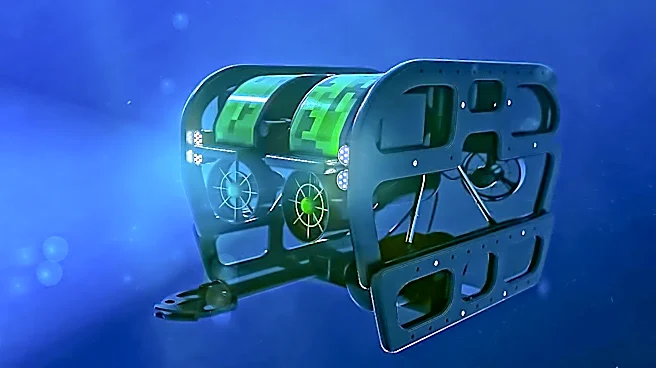
watts, marking a significant step in the development of long-lasting underwater power systems. The prototype utilized an electric heating element for this demonstration, but future iterations will generate heat from the radioactive decay of strontium-90, a radioisotope derived from spent nuclear fuel. Lindsey Boles, Zeno's chief product officer, highlighted the importance of this achievement, stating it solidifies the company's expertise in designing and translating this technology into operational hardware. This development is supported by the Department of Defense, following an initial $7.5 million contract awarded in 2023. The company aims to provide reliable, long-endurance power for various maritime applications, including undersea sensor networks and autonomous underwater vehicle recharging.
Why It's Important?
This advancement by Zeno Power holds significant implications for U.S. maritime capabilities and national security. The development of long-lasting nuclear batteries for underwater use could revolutionize how critical subsea infrastructure is powered and maintained. Retired Navy Adm. John Richardson, a Zeno board member and former chief of naval operations, emphasized that such powered subsea systems are crucial for maintaining undersea superiority as competition intensifies in contested domains. These batteries offer an energy solution that lasts for years, not days or months, addressing a key challenge in powering distributed systems at sea. This technology could enable more persistent and independent underwater operations, enhancing surveillance, communication, and defense capabilities without frequent resupply or maintenance interventions, thereby strengthening the U.S. strategic position in maritime environments.
What's Next?
Following this successful non-radiological test, Zeno Power plans to install a radioisotope heat source in its generator next year. This system will then undergo testing in a water tank under controlled laboratory conditions. If these tests prove successful, the company intends to proceed with the first operational seabed deployment of its radioisotope-fueled maritime system in late 2027. Beyond maritime applications, Zeno Power is also developing a nuclear-powered heater system for spacecraft, with a lunar surface demonstration scheduled as early as 2028. The company's broader vision includes providing long-lasting, reliable power for lunar and Martian missions, as well as for extreme environments on Earth. Zeno Power has secured $105 million in private capital and $60 million in contracts from the Pentagon and NASA since its founding in 2018.
Beyond the Headlines
The successful demonstration of Zeno Power's underwater nuclear battery prototype signals a potential paradigm shift in how remote and extreme environments are powered. The use of strontium-90, extracted from spent nuclear fuel, highlights a dual benefit: providing a sustainable power source while also potentially addressing nuclear waste management challenges by repurposing radioactive materials. This technology could reduce reliance on traditional energy sources that require frequent refueling or maintenance, thereby lowering operational costs and risks in hazardous environments. Furthermore, the application of nuclear battery technology extends beyond defense and space, potentially enabling long-term scientific research stations in deep-sea trenches or polar regions, fostering new discoveries and expanding human understanding of these inaccessible areas. The ethical considerations surrounding the deployment of radioactive materials in marine environments will also be a critical aspect as this technology advances.