
What's Happening?
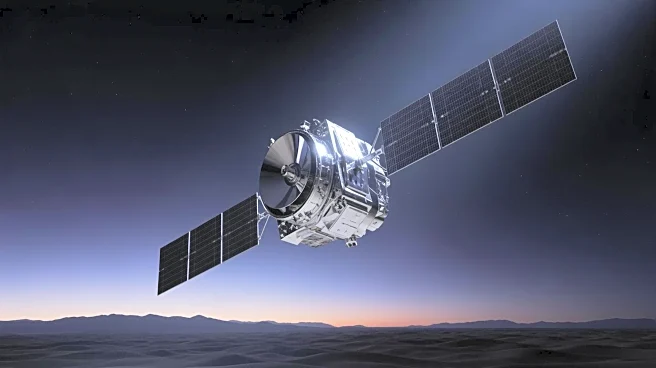
Saudi space technology company SARsatX is making significant strides in the space industry by preparing to launch the first Saudi-made commercial satellite. During the World Defense Show 2026 in Riyadh,
SARsatX signed a strategic cooperation agreement with the National Industrial Development Center (NIDC) to establish a facility for the manufacturing, assembly, integration, and testing of satellites in Saudi Arabia. CEO Amru Alamoudi announced plans to build the factory within 12 months and aims to produce and launch the satellite into orbit within two years. The NIDC is providing comprehensive support, including tax exemptions, discounted land, and financial grants. Additionally, SARsatX signed memorandums of understanding with Antaris, an AI company for space, and MetaSensing, to support the deployment of a constellation of 16 Synthetic Aperture Radar (SAR) and optical satellites, and to develop space-borne SAR payload technologies.
Why It's Important?
This development marks a significant milestone for Saudi Arabia's ambitions in the space sector, potentially positioning the country as a key player in the global satellite industry. The establishment of a local manufacturing facility could stimulate economic growth, create jobs, and foster technological innovation within the Kingdom. By collaborating with international companies like Antaris and MetaSensing, SARsatX is set to enhance its technological capabilities and expertise in satellite development. This initiative aligns with Saudi Arabia's Vision 2030, which aims to diversify the economy and reduce its dependence on oil by investing in high-tech industries.
What's Next?
SARsatX's next steps involve the construction of the satellite manufacturing facility and the continued development of the satellite constellation. The company will likely focus on building local expertise and infrastructure to support its ambitious timeline. The successful launch of the first Saudi-made commercial satellite could lead to further investments and partnerships in the space sector, potentially attracting more international collaborations. The progress of this project will be closely watched by industry stakeholders and could influence future policy decisions regarding space exploration and technology development in Saudi Arabia.