

What's Happening?
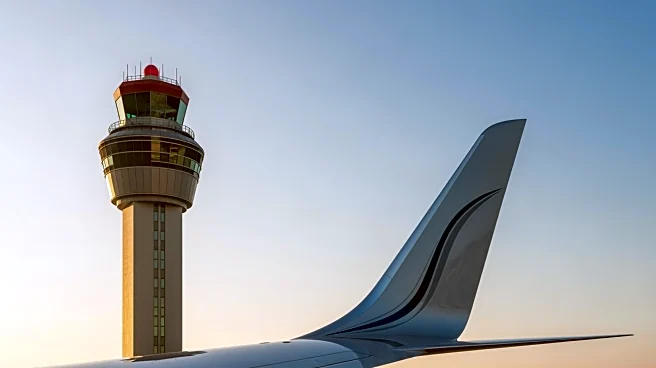
The Trump administration has announced a significant restructuring of the Federal Aviation Administration (FAA) to improve safety oversight. This move includes the creation of a new safety oversight office that will consolidate functions across five different
units. The restructuring comes just before the National Transportation Safety Board (NTSB) is set to criticize the FAA for its failure to act on near-miss incidents. These incidents include a January 2025 collision between an Army helicopter and an American Airlines passenger jet, which resulted in 67 fatalities near Reagan Washington National Airport. The FAA's new aviation safety office is part of a strategic plan aimed at improving hiring, training, and hazard identification. Despite the changes, the FAA has stated that there will be no reductions in force.
Why It's Important?
The restructuring of the FAA is crucial as it addresses longstanding safety concerns that have been highlighted by both lawmakers and the NTSB. The FAA has faced criticism for not adequately addressing close-call incidents, particularly those involving helicopters near Reagan Airport. Since 2021, there have been over 15,000 incidents with insufficient separation between aircraft, including 85 close calls. The new safety measures are expected to enhance the FAA's ability to manage risks and prevent future accidents. This move is significant for the aviation industry, as it aims to restore confidence in the FAA's oversight capabilities and ensure the safety of air travel in the U.S.
What's Next?
The FAA will continue to implement its safety management system and risk management process as part of the restructuring. FAA Administrator Bryan Bedford is overseeing a $12.5 billion rehabilitation of U.S. air traffic control, with an additional $19 billion requested to complete the project. The FAA is also relocating its headquarters to the main Transportation Department office in Washington. These steps are expected to improve the agency's operational efficiency and safety oversight capabilities. The aviation industry and lawmakers will likely monitor the FAA's progress closely to ensure that the new measures effectively address the safety concerns raised by the NTSB.