

What's Happening?
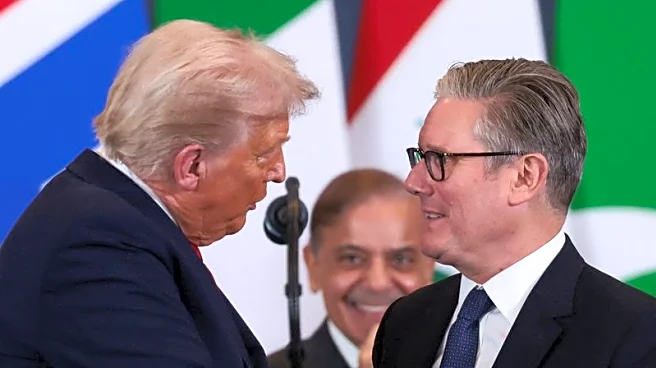
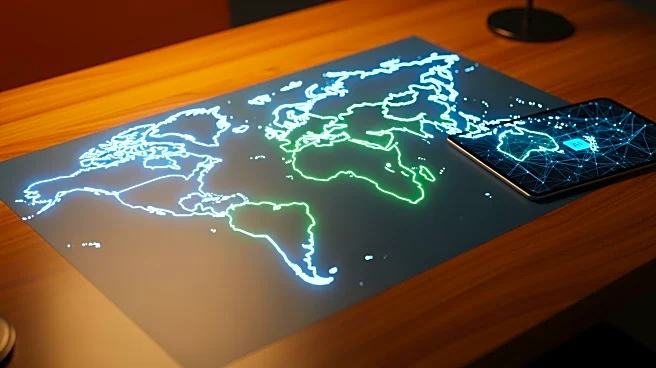
President Donald Trump has shared an AI-edited image on Truth Social that depicts a map of the United States expanded to include Greenland, Canada, and Venezuela. The image, which was posted on Monday night, appears to be a modified version of a photograph
taken during a meeting with European leaders in Washington in August 2025. The leaders present included French President Emmanuel Macron, British Prime Minister Keir Starmer, and European Commission President Ursula von der Leyen. Additionally, another AI-generated image shows President Trump, Vice President JD Vance, and Secretary of State Marco Rubio in Greenland, with Trump planting an American flag next to a sign that reads: 'Greenland - U.S. Territory. Est. 2026.' President Trump has previously expressed interest in acquiring Greenland for national security purposes and has not ruled out the possibility of military action if Denmark does not agree to sell the territory.
Why It's Important?
The sharing of this AI-edited map by President Trump highlights ongoing discussions and controversies surrounding U.S. territorial expansion and national security strategies. The inclusion of Greenland, Canada, and Venezuela in the map could signal a provocative stance in international relations, potentially affecting diplomatic ties with these nations and their allies. Greenland, in particular, has been a point of interest for the U.S. due to its strategic location and natural resources. The depiction of such territorial ambitions may raise concerns among international communities about U.S. intentions and the potential for geopolitical tensions. This development also underscores the increasing use of AI technology in political communication, which can influence public perception and international discourse.
What's Next?
As this story develops, it is likely to attract reactions from the international community, particularly from Denmark, Canada, and Venezuela. Diplomatic responses may vary, ranging from formal protests to calls for clarification from the U.S. government. The use of AI-generated images in political contexts may also prompt discussions about the ethical implications and potential regulations surrounding such technology. Domestically, this move could influence public opinion and political discourse, especially among those concerned with national security and foreign policy. Observers will be watching for any official statements or policy actions from the U.S. government regarding territorial expansion and international relations.