




What's Happening?
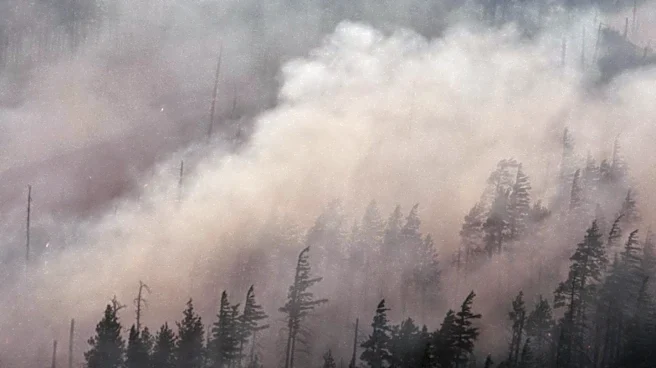
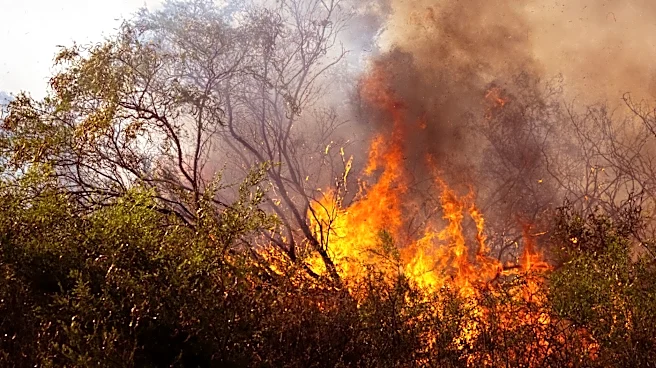
A rapidly spreading wildfire, named the Mukluk Fire, has led to evacuations in Tok, Alaska. The fire originated near milepost 1316 on the Alaska Highway and quickly expanded to over 20 acres, moving towards the Tanana River. Authorities have issued GO-level
evacuation orders for the northern part of Tok, advising residents to seek shelter at the local Mushers Hall. Firefighting teams from various regions, including Mat-Su and Kenai, are actively working to contain the blaze. The efforts are being challenged by prevailing hot, dry, and windy weather conditions, which are contributing to the fire's rapid growth and intensity. The situation remains dynamic as firefighters battle to bring the fire under control and protect the community.
Why It's Important?
The Mukluk Fire poses a significant threat to the community of Tok, Alaska, impacting residents, infrastructure, and the local environment. The immediate concern is the safety and displacement of residents due to the GO-level evacuation orders, which disrupt daily life and create uncertainty for those forced to leave their homes. Economically, the fire could lead to property damage or destruction, incurring substantial costs for rebuilding and recovery. The involvement of firefighting resources from multiple regions highlights the strain such events place on emergency services and inter-agency cooperation. Furthermore, the hot, dry, and windy conditions exacerbating the fire underscore the broader challenges of wildfire management in Alaska, particularly in the face of changing climate patterns that can increase the frequency and intensity of such events. The fire's proximity to the Alaska Highway also raises concerns about potential disruptions to transportation and commerce in the region.
What's Next?
Firefighting efforts will continue to focus on containing the Mukluk Fire and protecting structures in Tok. Residents under GO-level evacuation orders will await further instructions from authorities regarding when it is safe to return. Emergency services will assess the extent of any damage to properties and infrastructure once the fire is brought under control. The ongoing hot, dry, and windy weather conditions will remain a critical factor influencing the fire's behavior, and firefighters will monitor these conditions closely. Public safety advisories will likely continue, urging residents to stay clear of the fire area. The long-term recovery process for affected residents and the community will begin once the immediate threat has passed, potentially involving support from local and state agencies.
Beyond the Headlines
The Mukluk Fire in Tok, Alaska, highlights the increasing vulnerability of communities in wildland-urban interface areas to wildfires, a trend observed across the U.S. The rapid escalation of the fire, fueled by adverse weather, underscores the critical need for robust wildfire preparedness and response strategies, particularly in remote or sparsely populated regions. The reliance on inter-agency cooperation, with firefighters from various locations converging to assist, demonstrates the collective effort required to combat such large-scale natural disasters. This event also brings to light the psychological and social impacts on evacuated residents, who face not only the immediate threat to their homes but also the stress of displacement and uncertainty. The incident serves as a stark reminder of the environmental challenges facing Alaska, where climate-related factors can intensify natural hazards and necessitate continuous adaptation and resource allocation for disaster management.