
What's Happening?
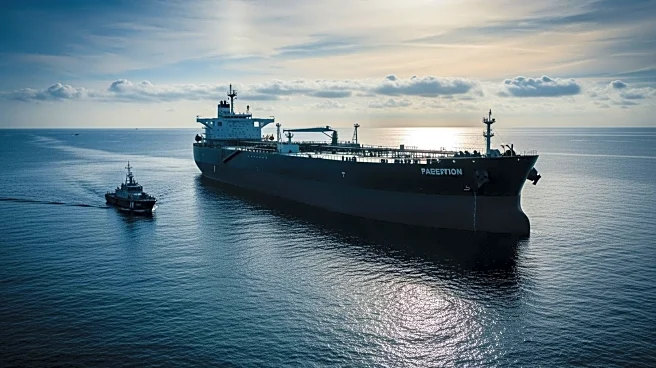
Iranian judicial authorities have seized a foreign oil tanker in the Sea of Oman, detaining its 18 crew members. The tanker, reportedly carrying 6 million liters of smuggled fuel, was intercepted and inspected
off the port city of Jask in Iranian-controlled waters. According to Mojtaba Ghahremani, head of the provincial judiciary in Hormozgan, the tanker ignored orders to stop and attempted to flee. It was also noted that the vessel lacked proper navigational and cargo documents, and its radar was turned off. The crew, consisting of individuals from South Asian countries such as India, Sri Lanka, and Bangladesh, is currently being questioned. This incident is part of a pattern where Iran's Islamic Revolutionary Guards Corps (IRGC) has seized ships in the Persian Gulf, often accusing them of smuggling fuel. The seizure follows a recent U.S. action where a Tehran-linked tanker was seized off the coast of Venezuela.
Why It's Important?
The seizure of the oil tanker by Iran highlights ongoing tensions in the Persian Gulf, a critical region for global fuel supplies. Such actions can exacerbate geopolitical tensions, particularly between Iran and Western nations, including the United States. The incident underscores the strategic importance of the region and the potential for disruptions in global oil markets. For the U.S., this development could impact foreign policy and economic interests, especially in maintaining the security of international shipping lanes. The situation also reflects broader issues of maritime security and the enforcement of international sanctions, as seen in the U.S. seizure of a Tehran-linked tanker. Stakeholders in the global energy market, including oil companies and shipping firms, may face increased risks and costs due to such geopolitical uncertainties.
What's Next?
The immediate next steps involve the questioning of the detained crew members by Iranian authorities. The international community, particularly countries with nationals among the crew, may seek diplomatic engagement with Iran to secure their release. Additionally, there could be further diplomatic or economic responses from countries affected by Iran's actions, potentially involving sanctions or negotiations. The situation may also prompt discussions within international bodies about maritime security and the enforcement of international laws in the Persian Gulf. Monitoring of the region is likely to intensify, with potential implications for future shipping operations and energy supply chains.