





What's Happening?
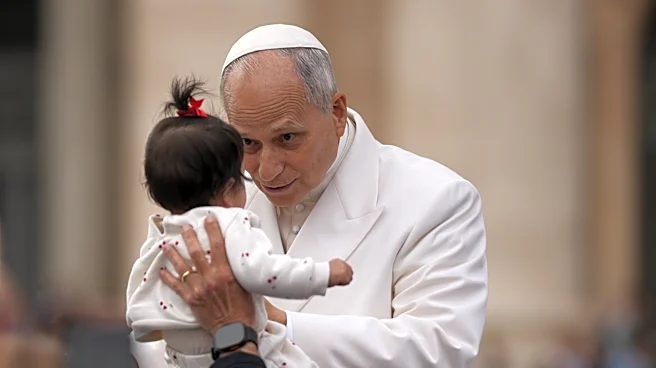
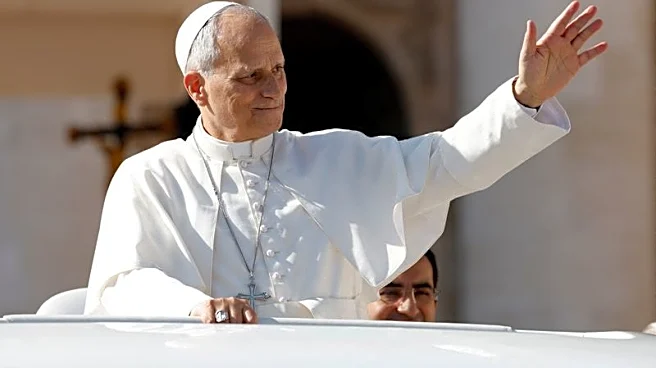
Pope Leo XIV has commenced an apostolic journey to Uruguay, Argentina, and Peru, marking his longest and farthest trip as Pope. The visit, scheduled from November 6-17, comes shortly after the Pope underwent surgery on October 13 to remove a cancerous
tumor from his right lung. Despite this, medical professionals cleared him for travel. The Pope's itinerary includes stops in Uruguay, where he will emphasize the connection between the nation's secular identity and its Catholic heritage, and Argentina, where he will address economic challenges and meet with President Javier Milei. A significant portion of the trip will be spent in Peru, where Pope Leo XIV served as a missionary priest and bishop for two decades, returning to his former diocese of Chiclayo and the mountain village of Santa Cruz de Succhabamba. This journey occurs as the proportion of Catholics in Latin America, particularly in the countries he is visiting, has seen a notable decline in recent years.
Why It's Important?
This apostolic journey is significant as it highlights the Catholic Church's efforts to re-engage with a region that historically has been a stronghold of Catholicism but is now experiencing a decline in adherence. Pope Leo XIV's focus on connecting secular nationhood with Catholic heritage in Uruguay and addressing socio-economic issues in Argentina and Peru underscores the Church's role in contemporary societal challenges. His meetings with political leaders, such as President Milei, and engagements with local communities, including those affected by poverty and gang violence, demonstrate the Vatican's commitment to social justice and pastoral care. The Pope's return to Peru, where he spent a formative period of his life, is particularly symbolic, as he is expected to offer insights into the challenges and hopes for the future of the Peruvian people, a nation grappling with climate chaos, crime, and inequality. The trip also serves as a testament to the Pope's dedication despite recent health challenges, reinforcing his leadership within the global Catholic community.
What's Next?
Following his visit to Uruguay, Pope Leo XIV will proceed to Argentina, where he is expected to address the country's economic woes and meet with President Javier Milei. This meeting could be a flashpoint, given Milei's past criticisms of the Pope and his government's spending cuts, which have strained relations with Argentine church leaders. The Pope will also visit a care home for people with disabilities, highlighting the impact of these economic policies. In Peru, his speeches will be closely watched, especially his address on the future of the Peruvian people, given the nation's multiple challenges. The Pope's engagements with popular groups and Indigenous peoples in Cusco and Pucallpa will likely draw attention to environmental and social justice issues. The outcomes of these discussions and the Pope's messages are anticipated to influence local political discourse and the Church's ongoing efforts to address societal issues in Latin America.
Beyond the Headlines
The Pope's journey extends beyond typical diplomatic visits, delving into the complex interplay of faith, secularism, and socio-economic realities in Latin America. The declining Catholic population in these countries, despite the region still housing a significant portion of the world's Catholics, points to broader shifts in religious landscape and societal values. The Pope's emphasis on the intrinsic connection between Uruguay's secular nationhood and its Catholic heritage suggests a strategic effort to redefine the role of faith in increasingly secular societies. Furthermore, his engagement with issues like artificial intelligence in Argentina, where President Milei has courted AI investment with limited regulation, highlights the ethical and moral dimensions the Vatican seeks to bring to emerging technological advancements. This trip could set a precedent for how the Catholic Church navigates and influences global conversations on technology, social justice, and religious identity in the 21st century.