




What's Happening?
Native communities in the U.S. have experienced $4.4 billion in natural disaster damage over the past decade but received only $810 million in disaster response and recovery funding from the Federal Emergency Management Agency (FEMA). This disparity is highlighted
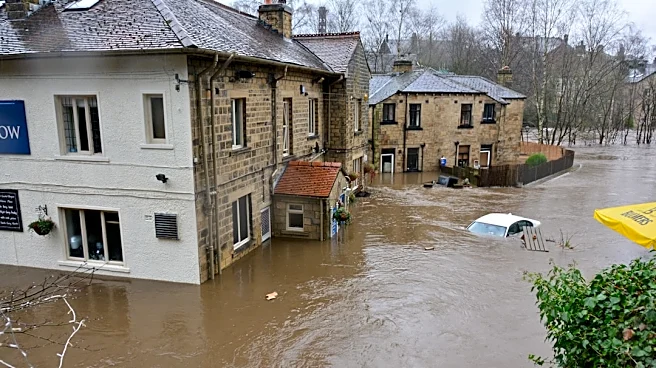
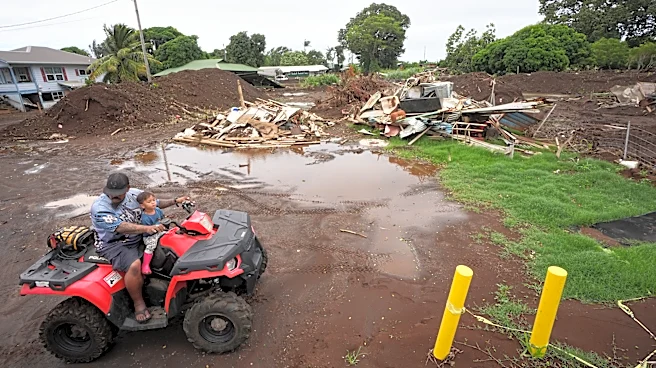
in a new analysis by the Urban Institute, which examined the disproportionate risk faced by Indian Country, including federally recognized tribes, Alaska Native villages, and three U.S. territories. The report indicates that tornadoes and flooding are the most costly disasters for tribal communities, accounting for $1.6 billion in property and crop damage. Western tribes primarily suffered from wildfires, while Alaska Native villages were most affected by flooding. Tribes in the South experienced a range of weather events, including drought, hail, hurricanes, and tornadoes. Overall, the damage to Indian Country represents only 1% of all national disaster damage. Since 2016, over half of all Native communities have endured two or more presidentially declared disasters, with 53% occurring within a two-year period, exacerbating economic and environmental impacts.
Why It's Important?
This significant funding gap underscores a critical issue of inequity in disaster response and recovery for Native communities. The Urban Institute's analysis reveals that high poverty rates, geographic isolation, prevalent chronic health conditions, and limited infrastructure contribute to Native communities incurring greater losses from disasters compared to non-Native communities. These factors are reflected in FEMA’s National Risk Index, which assesses risk based on exposure, social vulnerability, and resilience. The historical context is also crucial, as tribes and Alaska Native villages could not request disaster declarations independently until 2013, relying instead on state-led requests. This past limitation, combined with current funding disparities, means that Native communities face higher per capita disaster damage. The increasing frequency and intensity of natural disasters, projected to cost over $1 trillion in the U.S. in the next five years, make addressing these funding and vulnerability issues even more urgent for the well-being and resilience of Native populations.
What's Next?
The Urban Institute's analysis emphasizes the critical need for tribes to develop and update mitigation plans to reduce damage and facilitate access to FEMA funding. Successful examples, such as the Lummi Nation's 20-year evolving mitigation plan, demonstrate how proactive planning can enable quicker access to federal aid during disasters. The White Mountain Apache Tribe's collaboration with the U.S. Geological Survey for culturally and economically tailored risk assessments also serves as a model. Moving forward, there will likely be increased advocacy for policy changes to ensure more equitable distribution of FEMA funding and resources to Native communities. This could involve streamlining application processes, providing dedicated technical assistance for tribal governments in disaster preparedness and mitigation planning, and re-evaluating the criteria used for disaster declarations and funding allocations to better account for the unique vulnerabilities of Native populations. The findings may also spur greater investment in infrastructure and resilience-building initiatives within Indian Country.
Beyond the Headlines
The disproportionate impact of natural disasters on Native communities, coupled with inadequate funding, highlights deeper systemic issues rooted in historical marginalization and structural inequalities. The Urban Institute's report implicitly calls attention to the need for a more culturally sensitive and equitable approach to disaster management. Beyond financial aid, addressing the underlying social determinants of vulnerability—such as poverty, health disparities, and infrastructure deficits—is crucial for long-term resilience. The repeated occurrence of presidentially declared disasters in Native communities within short periods suggests a cycle of recovery and renewed vulnerability, hindering sustainable development. This situation also raises ethical questions about federal responsibility towards tribal sovereignty and self-determination in disaster response. A comprehensive solution would require not only increased funding but also empowering tribal nations with greater autonomy and resources to develop and implement their own disaster preparedness and recovery strategies, tailored to their specific cultural values and environmental contexts.