







What's Happening?
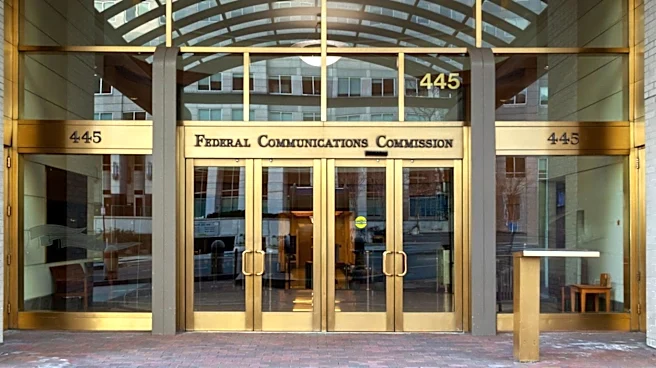
The Federal Communications Commission (FCC) has adopted new rules that will significantly restrict its recognition of certain foreign test labs, telecommunication certification bodies (TCBs), and laboratory accreditation bodies (collectively, 'Test Labs')
located outside the U.S. These new regulations, building on previous FCC actions against 'Bad Labs,' will only permit reliance on Test Labs situated in 'reciprocal economies.' A reciprocal economy is defined as a jurisdiction with which the U.S. has a Mutual Recognition Agreement (MRA) or a comparable government-to-government reciprocity agreement, such as a Free Trade Agreement (FTA) or Agreement on Reciprocal Trade (ART). The FCC has identified 62 countries that currently meet this criterion. A transition period is established, ending December 1, 2028, after which foreign Test Labs in non-reciprocal countries will be barred from issuing FCC equipment authorizations and conducting related testing. The ban will not affect authorizations granted or applications received before December 2028.
Why It's Important?
These new FCC rules are primarily driven by national security concerns, aiming to enhance the integrity and reliability of equipment authorization processes. The FCC has cited instances of fraudulent or inaccurate test results from previously accredited labs, underscoring the need for stricter oversight. By limiting recognition to Test Labs in reciprocal economies, the FCC seeks to mitigate potential risks associated with the supply chain and ensure that telecommunications equipment authorized for use in the U.S. meets rigorous security and performance standards. This move could impact U.S. equipment manufacturers who currently rely on foreign Test Labs in non-reciprocal countries, requiring them to shift their testing operations to approved facilities. The change is intended to safeguard U.S. telecommunications infrastructure from vulnerabilities that could arise from compromised or unreliable testing procedures.
What's Next?
The two-year transition period, ending December 1, 2028, is designed to provide affected equipment manufacturers with sufficient time to adjust their testing strategies and relocate their operations to facilities in reciprocal economies. Following this period, all foreign Test Labs in non-reciprocal countries will be prohibited from conducting FCC equipment authorizations. The FCC also plans to issue further proposals related to its equipment authorization rules, seeking public comment on potential requirements such as utilizing the Legal Identity Identifier for Test Labs, TCBs, and laboratory accreditation bodies. Additionally, the agency will propose measures to strengthen the integrity of the equipment authorization program, including expanding the sources used to identify prohibited entities. These ongoing efforts indicate a sustained focus by the FCC on national security and supply chain risk mitigation within the telecommunications sector.
Beyond the Headlines
The FCC's decision to restrict foreign test lab recognition highlights a broader trend of increasing scrutiny on global supply chains and national security in the technology sector. This policy reflects a growing concern among U.S. regulatory bodies about the potential for foreign entities to compromise critical infrastructure through various means, including the subversion of testing and certification processes. The emphasis on 'reciprocal economies' suggests a strategic effort to align U.S. regulatory practices with those of trusted international partners, fostering a more secure and transparent global telecommunications ecosystem. This move could also encourage domestic investment in U.S.-based testing facilities and potentially reshape international collaborations in equipment manufacturing and certification, emphasizing trust and security as paramount considerations.