
What's Happening?
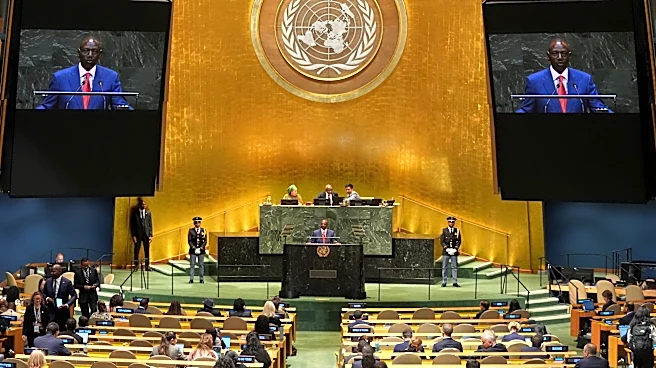
The United States has withheld its support for a High-Level Declaration on Pandemic Prevention, Preparedness and Response at the United Nations General Assembly. The U.S. representative stated that critical
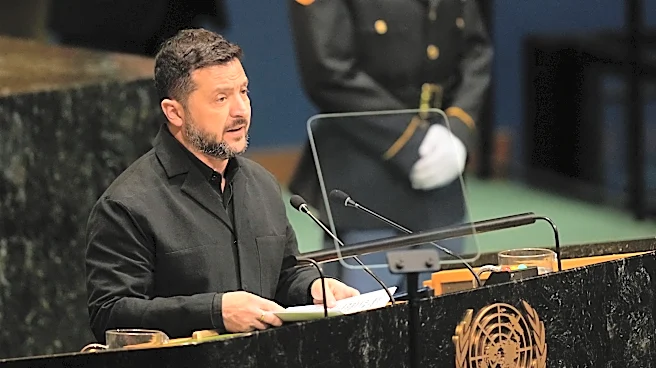
issues remain unresolved, including the inclusion of 'divisive ideologies that lack definitional consensus' and references to an unfinished negotiation on pathogen access and benefit sharing. This objection has prevented a consensus agreement on the draft text, pushing the decision back to the General Assembly for a potential vote before its annual session concludes in December. Several delegations, including Peru and Cabo Verde, had anticipated the declaration's adoption, while the Netherlands expressed regret over the inability to reach a common political outcome. General Assembly President Khalilur Rahman acknowledged broad support but noted ongoing observations, confirming further consideration by Member States.
Why It's Important?
The U.S. stance significantly impacts global efforts to establish a unified framework for pandemic readiness. Its refusal to support the declaration, particularly due to concerns over intellectual property and pathogen access, highlights a fundamental disagreement between developed and developing nations. The U.S. has been pursuing bilateral deals for pathogen data access with low-income nations, which some fear could undermine a multilateral PABS (Pathogen Access and Benefit Sharing) agreement. This approach could create a competing pathway for pathogen materials, potentially disadvantaging manufacturers participating in a PABS benefit-sharing system. The lack of a universally agreed-upon declaration could leave the world less prepared for future pandemics, as it hinders coordinated international responses and equitable access to medical countermeasures. The ongoing impasse also reflects broader geopolitical tensions regarding technology transfer and intellectual property rights in global health crises.
What's Next?
The High-Level Declaration on Pandemic Prevention, Preparedness and Response will now be further considered by the Member States in the General Assembly, with a potential vote before December. The World Health Organization (WHO) Director-General, Dr. Tedros Adhanom Ghebreyesus, is urging member states to rapidly conclude the Pathogen Access and Benefit Sharing (PABS) annex to the WHO Pandemic Agreement, emphasizing that delays will cost countries when the next pandemic arrives. Developing nations, including Kenya and Egypt, are advocating for the PABS annex to ensure rapid and equitable sharing of pathogens, scientific information, and the resulting medical products. The European Union, while generally supportive of the declaration's objectives, has also expressed reservations regarding compulsory licensing and stressed the importance of voluntary technology transfer. The ongoing negotiations for the PABS annex are crucial, as the 2025 WHO Pandemic Agreement cannot be fully implemented until this annex is finalized.
Beyond the Headlines
The U.S. objection to the UN pandemic readiness declaration underscores a deeper tension between national interests and global health solidarity. The debate over 'compulsory licensing' and 'intellectual property' reflects a long-standing conflict between pharmaceutical companies' desire to protect their innovations and the global need for equitable access to life-saving treatments during health emergencies. The U.S. preference for bilateral agreements over multilateral frameworks could fragment global health governance, potentially creating a two-tiered system where access to critical resources is determined by individual country deals rather than a unified international approach. This could exacerbate health inequalities, particularly for low-income nations, and undermine the 'One Health' approach, which recognizes the interconnectedness of human, animal, and environmental health. The lack of explicit recognition for animal welfare in the declaration, despite most emerging infectious diseases being zoonotic, also points to a gap in comprehensive pandemic prevention strategies.