






What's Happening?
Central Asia is facing significant environmental challenges that are impacting global food markets and trade routes. The region, which includes Kazakhstan, is experiencing rising temperatures, glacier loss, and increased land degradation. These environmental changes
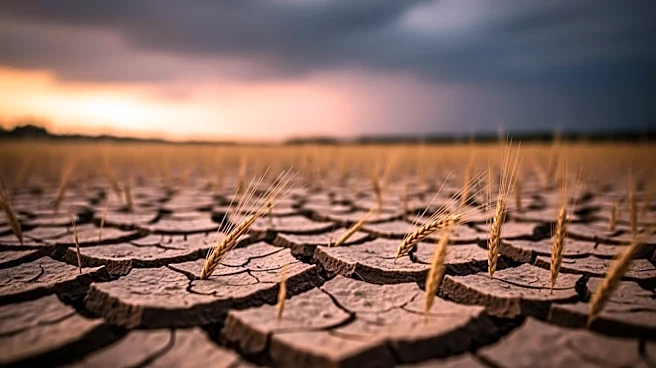
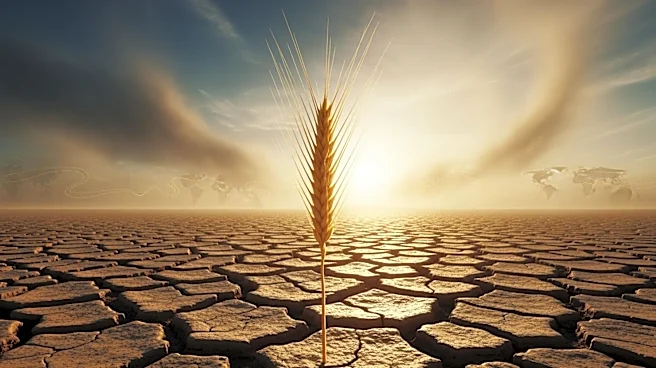
are affecting water availability, agriculture, and energy generation. Kazakhstan, a major wheat exporter, could see a decline in wheat yields by up to 49% by 2050, which would have repercussions on global food prices and security. Additionally, Central Asia is a key node in trade corridors linking China to Europe, and environmental degradation threatens these systems.
Why It's Important?
The environmental crisis in Central Asia has far-reaching implications for global food security and economic stability. As a major agricultural region, disruptions in Central Asia can affect food prices and availability in regions reliant on imports, such as the Middle East and South Asia. Furthermore, the region's role in transcontinental trade and energy corridors means that environmental instability could disrupt logistics and energy infrastructure, impacting global supply chains. The situation underscores the need for international cooperation and investment in climate adaptation and environmental restoration to mitigate these risks.
What's Next?
Countries in Central Asia are beginning to address environmental pressures through national policies and regional initiatives. Kazakhstan is hosting a Regional Ecological Summit to align approaches to water security and climate adaptation. The summit aims to improve coordination and data-sharing among countries to address shared challenges. Additionally, Kazakhstan has updated its climate commitments under the Paris Agreement, focusing on emissions reduction and renewable energy. These efforts highlight the importance of regional cooperation in tackling transboundary environmental issues.
Beyond the Headlines
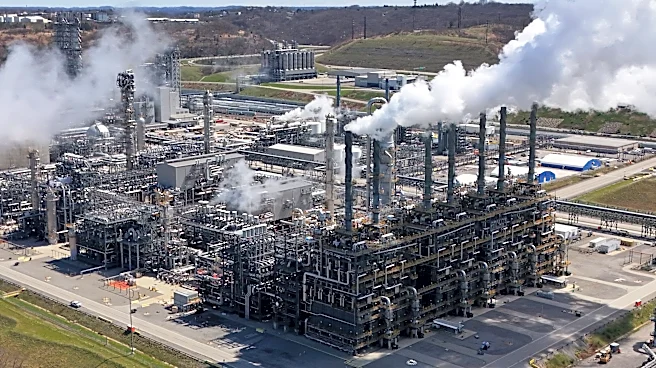
The environmental challenges in Central Asia illustrate the interconnectedness of climate change, economic development, and geopolitical stability. The region's transformation is a test of international cooperation in adapting to environmental changes that cross borders. Building resilience in strategically important ecosystems and economic corridors is crucial for safeguarding global stability. The situation calls for a broader understanding of environmental stability as a foundation for economic resilience.