




What's Happening?
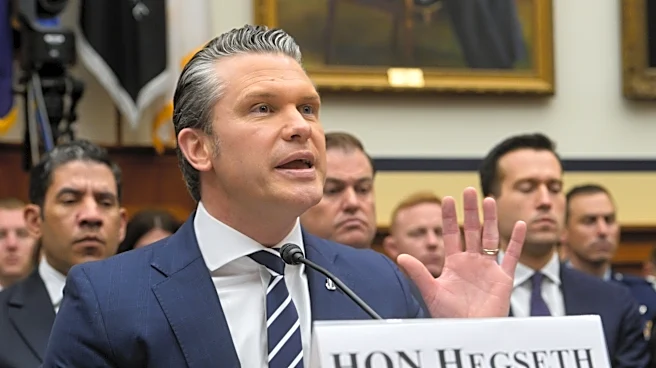
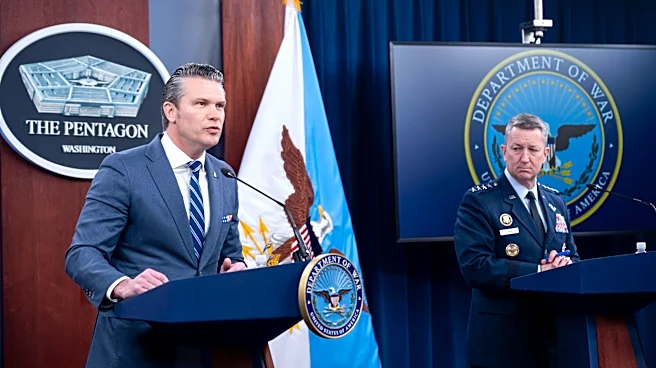
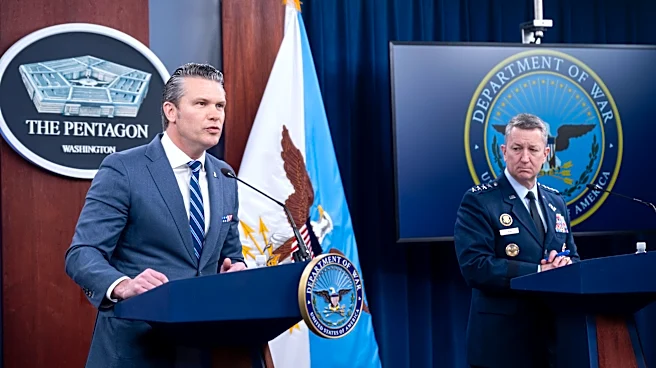
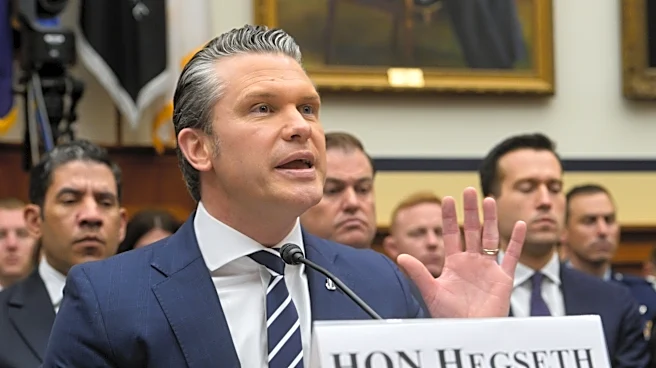
Defense Secretary Pete Hegseth appeared before Congress to address concerns over the ongoing war with Iran, which has cost $25 billion so far. The hearing, focused on the 2027 military budget proposal, saw Democrats questioning the war's justification
and its financial burden. Hegseth defended the administration's actions, citing Iran's nuclear ambitions as a threat. The session also covered Hegseth's controversial personnel changes, including the firing of top military leaders, which he justified as necessary for fostering a 'warrior culture' at the Pentagon. The war, initiated without congressional approval, has led to economic repercussions, including rising fuel prices due to Iran's closure of the Strait of Hormuz.
Why It's Important?
The Iran conflict has significant implications for U.S. foreign policy and domestic economics. The war's financial strain and its impact on fuel prices are pressing concerns for American consumers and could influence upcoming elections. The personnel changes at the Pentagon reflect a shift in military strategy under President Trump's administration, potentially affecting military morale and operational effectiveness. The lack of congressional oversight raises questions about executive power in military engagements, highlighting a critical debate on war powers and democratic accountability.
What's Next?
The U.S. remains in a stalemate with Iran, with ongoing military operations and economic sanctions. The administration's strategy and its impact on global oil markets will be closely monitored. Congressional efforts to assert oversight through war power resolutions may continue, potentially leading to legislative challenges. The Pentagon's leadership changes could result in further scrutiny and debate over military governance and strategy.