





What's Happening?
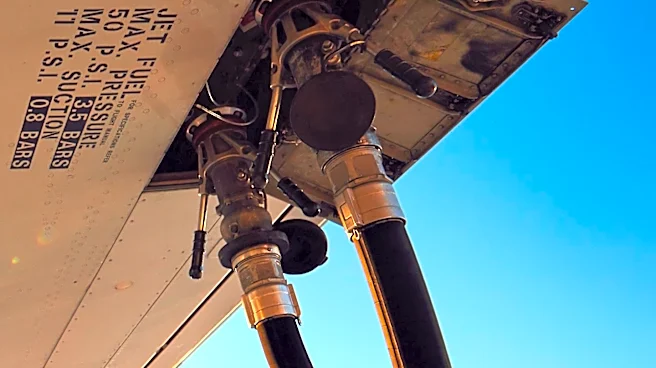
A Polish-led consortium is developing a new type of aviation and military fuel derived from straw, used textiles, and carbon dioxide. This initiative, provisionally named k-JPPW, aims to reduce Poland's reliance on imported crude oil for military and civilian
fuel needs. The project is designed to support NATO's 'Single Fuel Concept,' which seeks to standardize fuel types across most military vehicles, aircraft, and naval vessels in field conditions. The consortium is led by the Łukasiewicz Industrial Chemistry Institute and includes other specialized institutes within the Łukasiewicz Research Network. The fuel production process will utilize lignocellulosic biomass (agricultural waste like straw), used textiles, and methanol produced from carbon dioxide and hydrogen sourced from renewable energy. Researchers anticipate that this fuel could potentially achieve a negative greenhouse gas emissions balance, meaning it would absorb more carbon dioxide during production than it emits. The project is currently in the planning phase, with initial research contingent upon securing funding.
Why It's Important?
This development is significant for several reasons, particularly in the context of national security and environmental sustainability. For Poland, it represents a strategic move to enhance energy independence, reducing vulnerability to disruptions in global crude oil markets, especially from politically unstable or sanctioned regions. This aligns with broader NATO objectives to improve logistical efficiency and interoperability through the 'Single Fuel Concept.' The potential for a negative greenhouse gas emissions balance also positions this project as a leader in sustainable aviation and military fuel development, addressing environmental concerns while meeting critical defense needs. The increasing demand for aviation and propulsion fuels, driven by Poland's military expansion and civilian infrastructure projects like the Central Communication Port, underscores the urgency and importance of developing domestic, sustainable fuel sources. Furthermore, the EU's ReFuelEU Aviation regulation, requiring 20% sustainable aviation fuel by 2035, highlights the growing regulatory pressure for such innovations.
What's Next?
The immediate next step for the k-JPPW project is securing the necessary funding to commence initial research. Once funded, the consortium, led by the Łukasiewicz Industrial Chemistry Institute, will begin the scientific and technical work to develop and refine the fuel production processes. This will involve detailed research into converting lignocellulosic biomass, used textiles, and carbon dioxide into viable jet fuel. Concurrently, the project will need to navigate regulatory frameworks and certification processes for military and aviation use, which can be extensive. As Poland continues its military modernization and expansion, including the introduction of new fighter jets and an increase in ground and naval forces, the demand for this domestically produced fuel will likely grow. The success of this project could also serve as a model for other NATO member states looking to enhance their energy security and reduce their carbon footprint in defense operations.
Beyond the Headlines
Beyond the immediate goal of fuel production, this project touches upon broader implications for defense logistics, industrial innovation, and environmental policy. The 'Single Fuel Concept' itself represents a significant logistical simplification for military operations, reducing the complexity and vulnerability of supply chains in conflict zones. The use of waste materials like straw and used textiles for fuel production also highlights a circular economy approach, transforming waste into valuable resources and reducing landfill burden. This could spur further innovation in waste-to-energy technologies across various sectors. Ethically, developing fuels with a negative greenhouse gas emissions balance could set a new standard for military sustainability, challenging the traditional view of defense industries as major polluters. Legally, the project will likely influence future EU and NATO regulations regarding sustainable fuels and defense procurement, potentially creating new market opportunities for similar green technologies. Culturally, it reinforces the idea that national security and environmental stewardship can be mutually reinforcing goals.