





What's Happening?
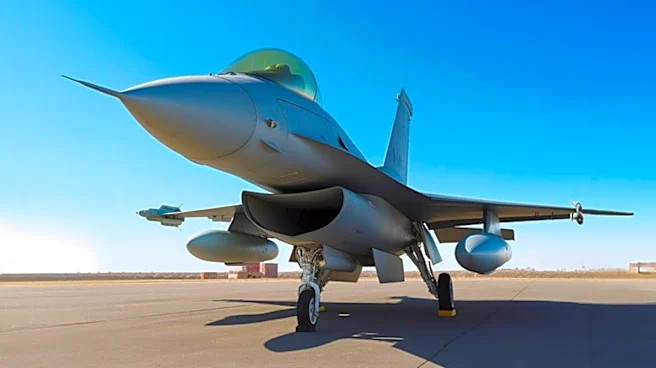
Belgium has reinforced NATO’s eastern flank by deploying six F-16 Fighting Falcons and approximately 100 military personnel to Šiauliai Air Base in Lithuania. This deployment, confirmed by NATO Allied Air Command on November 12, 2026, strengthens Allied air
defense capabilities in the Baltic region. The Belgian F-16s are joining Italian Eurofighter Typhoons, with Italy maintaining its lead-nation role in the enhanced air defense responsibilities. This move boosts NATO’s ability to intercept Russian aircraft and defend Baltic airspace, expanding the Alliance’s capacity to counter aerial threats near Russia and Belarus. Belgium's participation marks a significant national contribution and demonstrates NATO unity, reaffirming its role as a dependable European security partner.
Why It's Important?
This deployment is crucial for bolstering NATO's defensive posture in Northern and Eastern Europe, particularly in a strategically sensitive region situated between Russia’s Kaliningrad exclave and Belarus. The integration of Belgian F-16s with Italian Eurofighters sends a clear deterrent message, emphasizing that the security of the Baltic states is a shared Allied responsibility. The enhanced presence extends beyond conventional air interception, contributing to a broader NATO Air Defence framework designed to respond to threats from manned aircraft, unmanned aerial systems, and missiles. This multinational cooperation and continuous operational readiness are vital for maintaining collective defense across Europe’s eastern flank, especially given the complex security environment shaped by Russia’s actions and persistent concerns over aerial activity near NATO territory.
What's Next?
The deployment is part of NATO's ongoing adaptation to an evolving threat environment, with the Alliance having agreed at the July 2026 NATO Summit in Ankara to expand the traditional Air Policing mission into a comprehensive Air Defence framework. This shift requires closer coordination between fighter aircraft, early-warning networks, ground-based defensive assets, and Allied command structures to address increasingly complex aerial threats. Lithuania’s Ministry of National Defence reported three NATO air-defense alerts during November 2-8, 2026, involving Russian aircraft, underscoring the continuing demands on Allied forces. Belgium's participation strengthens NATO's ability to distribute operational responsibilities and maintain a credible, responsive defensive posture, with future efforts likely focusing on further integration and readiness exercises.
Beyond the Headlines
The deployment highlights a fundamental strategic commitment within NATO: the security of individual member states, particularly those on the eastern flank, is intrinsically linked to the security of the entire Alliance. This move also reflects a broader trend of European nations increasing their contributions to collective defense, demonstrating a proactive approach to regional security challenges. The historical significance of Belgian F-16s pioneering NATO’s Baltic Air Policing mission in 2004 underscores a long-standing commitment to Allied airspace security. The emphasis on multinational integration and coordinated decision-making points to a sophisticated, layered defense architecture designed to improve threat detection and responsiveness, moving beyond reliance on individual platforms to a more cohesive and resilient collective defense strategy.