






What's Happening?
Fossil fuel and related corporations have demanded over $443 billion from governments through Investor-State Dispute Settlement (ISDS) mechanisms embedded in trade agreements. This figure represents a 22% increase from 2023 in claims made by fossil fuel investors.
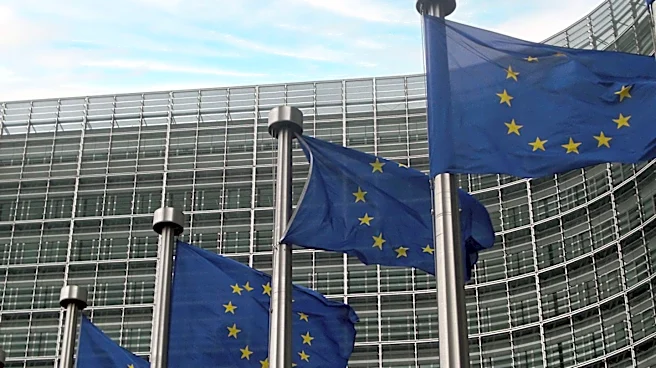
ISDS provisions allow corporations to sue governments for policies that negatively impact their investments and profits, including those aimed at regulating planet-heating oil and gas emissions. According to data analyzed by Global Justice Now and PowerShift, based on 987 publicly disclosed ISDS cases, corporate investors have sought a total of $1.177 trillion up to 2025. Fossil fuel investors have received the 'lion's share' of compensation awarded, totaling $85.9 billion, or nearly 70% of all payouts to investors. This week, U.S. company ExxonMobil launched a legal challenge against the European Union's Net Zero Industry Act, which requires the company to pay for carbon storage, claiming it imposes 'unrealistic timelines.'
Why It's Important?
The extensive use of ISDS mechanisms by fossil fuel companies to sue governments for climate policies poses a significant threat to global climate action and has direct implications for the U.S. and its allies. These lawsuits divert substantial public funds, equivalent to the estimated minimum economic losses developing countries will face due to climate change by 2030, away from essential public services and climate initiatives. This 'weaponization' of ISDS creates a chilling effect, discouraging governments from implementing ambitious environmental regulations for fear of costly legal battles. For the U.S., this means that domestic and international efforts to transition to clean energy could be undermined by corporate legal challenges, potentially slowing down decarbonization efforts and increasing financial burdens on taxpayers. The ability of corporations to challenge sovereign climate policies through these secretive tribunals raises concerns about democratic governance and the prioritization of corporate profits over public welfare and environmental protection.
What's Next?
Campaigners at the UN Climate Change Conference (COP31) are calling for a coordinated phase-out of ISDS mechanisms. An official side event at COP31 will feature discussions on this issue, with representatives from countries like Australia, South Africa, and Indonesia, which have taken steps to exclude ISDS from future trade deals. The outcome of these discussions and the broader push to dismantle ISDS provisions will be crucial for empowering governments to enact necessary climate policies without fear of corporate retaliation. The ongoing legal challenge by ExxonMobil against the EU's Net Zero Industry Act will also be a key case to watch, as it could set a precedent for how climate regulations are challenged by the fossil fuel industry. The international community faces a critical decision on whether to reform or eliminate these provisions to accelerate climate action.
Beyond the Headlines
The phenomenon of fossil fuel companies suing governments through ISDS mechanisms highlights a fundamental tension between international trade law and environmental protection. These provisions, originally designed to protect foreign investments, are now being used to impede climate action, revealing a systemic flaw in global governance. The 'obscene' nature of these payouts, as described by campaigners, underscores a moral dilemma where the very entities contributing to the climate crisis are compensated for measures taken to mitigate it. This situation also exposes the power imbalance between multinational corporations and sovereign states, particularly developing nations with limited legal resources. Addressing this issue requires not only policy changes but also a re-evaluation of the ethical foundations of international trade agreements and a stronger commitment to climate justice. The continued existence of ISDS mechanisms could perpetuate a cycle where climate action is perpetually delayed or diluted, with severe long-term consequences for the planet and its inhabitants.