





What's Happening?
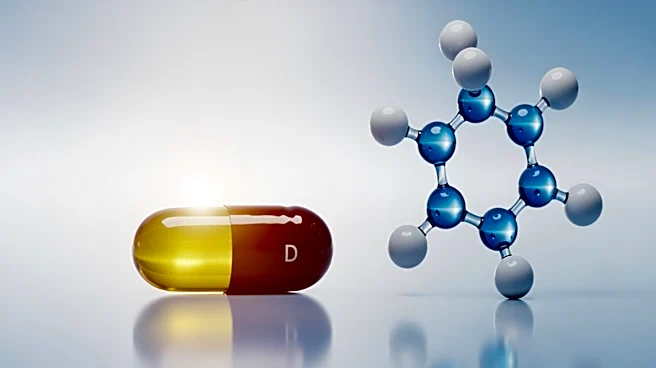
A clinical trial led by Dana-Farber Cancer Institute researchers has explored the use of paricalcitol, a vitamin D analog, in combination with standard chemotherapy for treating metastatic pancreatic cancer. The study, published in Nature Cancer, found
that paricalcitol helps reshape the tumor microenvironment, making the cancer more susceptible to treatment. Patients receiving paricalcitol showed improved chemotherapy responses and increased progression-free survival. The trial also noted that patients with high vitamin D receptor expression had the longest overall survival. This approach leverages the body's natural systems to reduce fibrotic and inflammatory responses, potentially overcoming therapeutic resistance in pancreatic cancer.
Why It's Important?
Pancreatic cancer is notoriously difficult to treat, with poor outcomes for many patients. The trial's findings suggest that vitamin D analogs like paricalcitol could play a crucial role in enhancing the effectiveness of existing therapies by modifying the tumor's protective environment. This could lead to improved survival rates and offer a new avenue for treatment. The study also highlights the potential of using vitamin D receptor expression as a biomarker to predict patient responses, paving the way for more personalized treatment strategies. If further validated, this approach could significantly impact the management of pancreatic cancer.
What's Next?
The promising results from this trial set the stage for larger clinical studies to evaluate the impact of combining vitamin D analogs with chemotherapy on survival outcomes. Future research will also explore whether baseline vitamin D receptor expression can reliably predict patient responses to combination therapies. These studies could establish a new standard of care for pancreatic cancer, offering hope for improved treatment options. Additionally, researchers will continue to investigate the broader applications of vitamin D analogs in other cancers and fibrotic diseases.