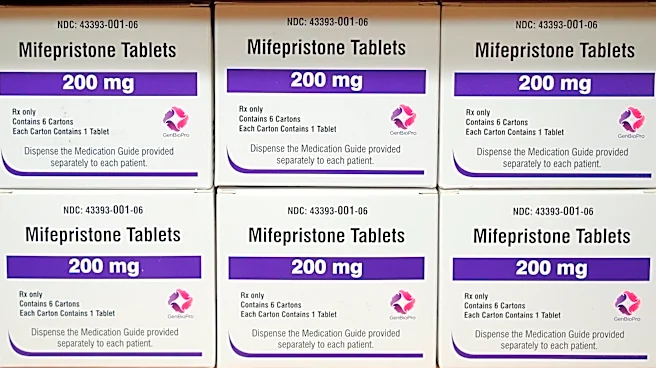

What's Happening?
The Supreme Court has allowed the continued use of telehealth for accessing the abortion pill mifepristone, maintaining the status quo while a legal challenge from Louisiana proceeds. The court's decision
temporarily halts a ruling by the 5th Circuit Court of Appeals that required in-person visits for obtaining the drug. Justices Thomas and Alito dissented, arguing that the decision undermines the court's previous ruling overturning Roe v. Wade. The case will now return to the appeals court for further consideration.
Why It's Important?
This decision is crucial for maintaining access to medication abortions, which have become increasingly common since the Supreme Court's 2022 decision to overturn Roe v. Wade. Telehealth access to mifepristone is particularly important for individuals in states with restrictive abortion laws, as it allows them to obtain the medication without traveling to a clinic. The ruling underscores the ongoing conflict between state and federal authorities over abortion rights and the role of the FDA in regulating medication. The outcome of this case could have significant implications for the future of reproductive healthcare in the U.S.
What's Next?
The case will continue to be litigated in the lower courts, with the potential to return to the Supreme Court for a final decision. The FDA's ongoing safety review of mifepristone could also impact future regulations. Stakeholders, including state governments, healthcare providers, and advocacy groups, will likely continue to engage in legal and political efforts to influence the outcome. The decision highlights the broader debate over the balance of power between state and federal authorities in regulating healthcare and reproductive rights.