

What's Happening?
Two Mexican Navy ships have arrived in Cuba carrying humanitarian aid as the island faces an energy crisis exacerbated by a U.S. blockade. The ships, which docked on Thursday, are laden with essential supplies including food and personal hygiene items.
This aid comes in response to U.S. President Trump's recent threats to impose tariffs on countries supplying oil to Cuba, leading to energy rationing on the island. The Mexican government, led by President Claudia Sheinbaum, has taken this step while diplomatic efforts to resume oil supplies continue. Previously, Mexico's state-owned oil company, Pemex, had halted crude oil shipments to Cuba. The energy crisis has been further intensified by the cessation of oil shipments from Venezuela, following U.S. actions against the South American nation.
Why It's Important?
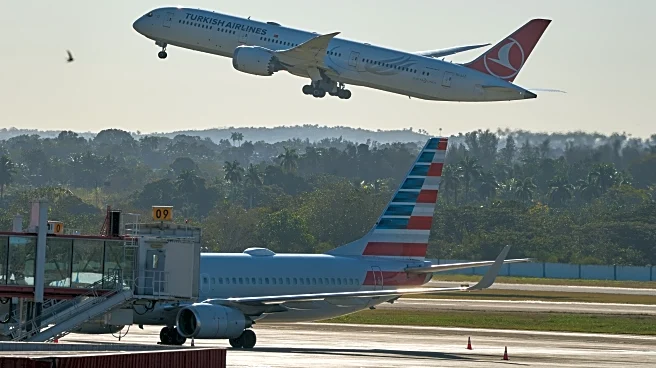
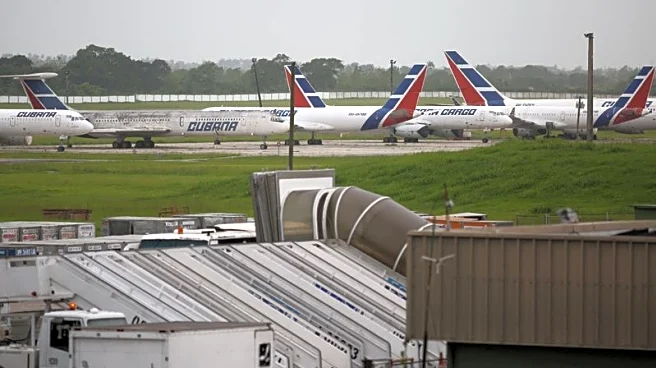
The delivery of humanitarian aid by Mexico highlights the severe impact of U.S. sanctions on Cuba, particularly in the energy sector. The blockade has led to significant disruptions in essential services such as transportation, healthcare, and tourism, which are vital to Cuba's economy. The energy shortages have forced Cuba to implement measures like reducing bank hours and suspending cultural events, while also affecting international travel as airlines face fuel shortages. The situation underscores the geopolitical tensions between the U.S. and Cuba, with Mexico stepping in to provide relief amidst strained diplomatic relations. The aid delivery also reflects Mexico's stance on humanitarian support, despite the complex political landscape.
What's Next?
Cuba is likely to continue seeking international support to mitigate the effects of the U.S. blockade. The Cuban government may intensify diplomatic efforts to secure alternative energy supplies and alleviate the current crisis. Meanwhile, the U.S. administration's stance on Cuba remains a critical factor in the island's economic stability. The ongoing energy crisis could prompt further international responses, either in support of Cuba or in alignment with U.S. policies. The situation may also influence future diplomatic relations between Cuba, Mexico, and other nations involved in the region.
Beyond the Headlines
The humanitarian aid delivery by Mexico could have broader implications for regional alliances and the balance of power in Latin America. It highlights the role of neighboring countries in addressing humanitarian needs amidst political conflicts. The situation also raises questions about the long-term sustainability of Cuba's energy infrastructure and its reliance on external sources. Additionally, the crisis may prompt discussions on the ethical considerations of economic sanctions and their impact on civilian populations.