

What's Happening?
Recent studies utilizing integrated reflectance hyperspectral imaging (HSI) and macro-XRF have uncovered new insights into Raphael's 'Baglioni Deposition'. These non-invasive techniques have allowed researchers to analyze the painting's pigments and materials,
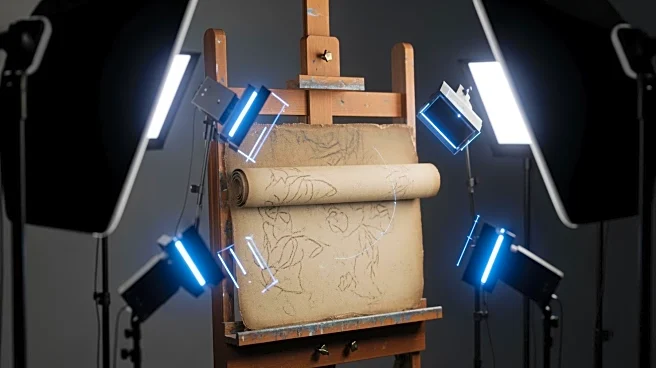
revealing details not visible to the naked eye. The study highlights the use of multivariate data-compression algorithms to enhance spectral variances, which helps identify zones of pictorial changes or discontinuities. This approach has uncovered concealed aspects of the landscape and intermediate phases of the painting process. The findings suggest that Raphael's preparatory design was executed in multiple stages using various materials, including different types of inks and drawing tools.
Why It's Important?
The application of advanced imaging techniques to study historical artworks like Raphael's 'Baglioni Deposition' is significant for art historians and conservators. It provides a deeper understanding of the artist's techniques and material choices, offering clues into the creative process. This interdisciplinary approach bridges scientific and humanistic perspectives, transforming the way paintings are studied. The insights gained can influence conservation strategies and enhance the appreciation of Renaissance art. Additionally, these findings contribute to the broader field of art history by providing a more comprehensive view of the materials and methods used by renowned artists.
What's Next?
The continued use of advanced imaging techniques in art analysis is likely to uncover further details about historical artworks. Researchers may apply these methods to other paintings, potentially revealing new information about artists' techniques and material choices. This could lead to revised interpretations of artworks and influence conservation practices. As awareness of these technologies grows, more art historians and conservators may seek integrative technical studies to enhance their understanding of artworks. The findings from such studies could also inform educational programs and exhibitions, enriching public engagement with art history.
Beyond the Headlines
The use of non-invasive imaging techniques raises ethical considerations regarding the preservation of cultural heritage. While these methods offer valuable insights, they must be applied carefully to avoid damaging delicate artworks. The findings also highlight the importance of interdisciplinary collaboration in art analysis, combining expertise from fields such as chemistry, physics, and art history. This approach can lead to more holistic interpretations of artworks, considering both scientific data and historical context. As technology advances, the potential for uncovering hidden details in artworks increases, offering new opportunities for research and discovery.