






What's Happening?
The International Energy Agency (IEA) has issued a warning regarding the risks associated with the supply of critical minerals, which are essential for industrial and energy transitions. The IEA's 2026 Global Critical Minerals Outlook highlights that
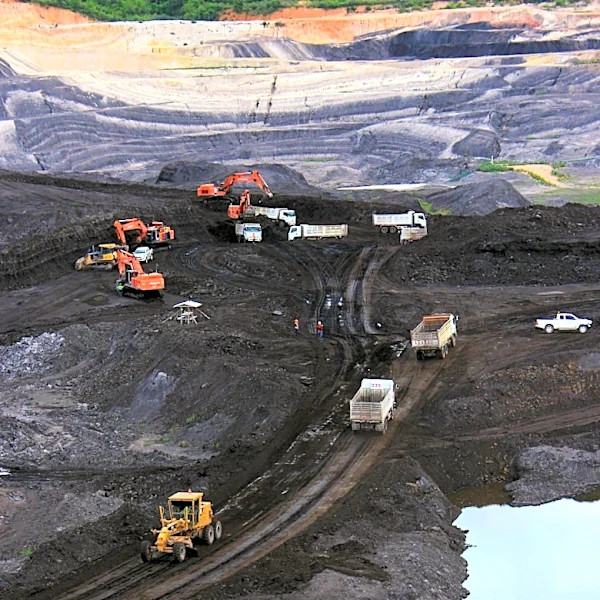
declining investments and increasingly concentrated supply chains could jeopardize efforts by countries like France to secure these vital materials. The report notes that prices for minerals such as cobalt, copper, graphite, lithium, nickel, and rare earth elements have rebounded in 2025 and early 2026 due to tightening supply conditions. Export restrictions from major suppliers have contributed to price volatility, and investment in the sector fell by 9% in 2025. The report also mentions that Indonesia and China have dominated growth in refined mineral supply, further concentrating the market. In response, France has launched a €500 million critical minerals strategy as part of its France 2030 investment plan to reduce dependence on external sources for 26 key raw materials.
Why It's Important?
The IEA's warning underscores the strategic importance of securing critical minerals for countries aiming to transition to sustainable energy and industrial systems. The concentration of supply chains in countries like China and Indonesia poses a significant risk to global supply stability, potentially affecting industries reliant on these materials. For the U.S., this situation highlights the need to diversify supply sources and invest in domestic capabilities to mitigate risks associated with foreign dependencies. The potential impact on downstream production, estimated at $6.5 trillion annually outside China, emphasizes the economic stakes involved. France's proactive measures to develop domestic extraction and processing capabilities serve as a model for other nations, including the U.S., to enhance their resilience against supply chain disruptions.
What's Next?
Countries are likely to increase investments in domestic mining and processing capabilities to reduce reliance on concentrated supply chains. The U.S. and other nations may follow France's lead in implementing strategic plans to secure critical minerals. Additionally, there could be increased collaboration among countries to develop alternative supply chains and technologies for mineral extraction and processing. The focus on recycling and establishing 'urban mines' for recovering materials from used products may gain traction as a sustainable approach to resource management. Stakeholders, including governments and industries, will need to navigate geopolitical tensions and trade policies that could further impact the availability and pricing of critical minerals.