








What's Happening?
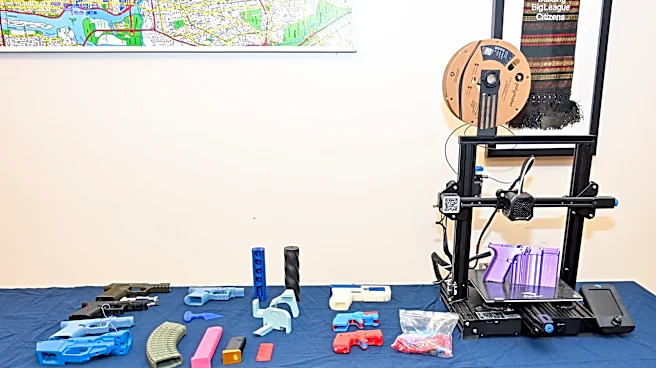
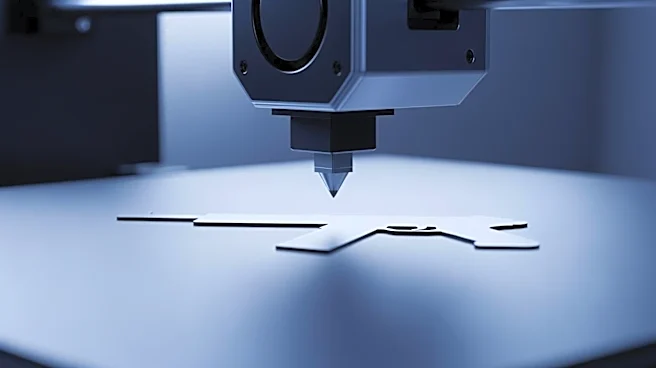
New York Governor Kathy Hochul has signed into law a requirement for 3D printers sold in the state to include technology that prevents the printing of guns. This legislation, part of the state's 2026-2027 budget, aims to reduce gun violence by ensuring
printers cannot produce firearms or illegal gun parts. The law mandates a civil penalty of $5,000 per product sold in violation. Critics, including the National Rifle Association and the Electronic Frontier Foundation, argue that the law raises First Amendment issues by potentially limiting free expression. The law establishes a working group to recommend safety standards for 3D printers, with the Division of Criminal Justice Services tasked with finalizing the rules. If deemed technologically infeasible, the law will not be enforced until feasible solutions are found.
Why It's Important?
The legislation represents a significant step in addressing gun violence through technological regulation. By requiring 3D printers to block the production of firearms, New York aims to prevent the creation of untraceable, unserialized guns, which pose a threat to public safety. However, the law's implications for free speech and expression have sparked debate, highlighting the tension between public safety measures and constitutional rights. The outcome of this legislation could influence similar measures in other states, impacting manufacturers, consumers, and advocacy groups concerned with both gun control and free expression.
What's Next?
The working group will continue to assess the feasibility of implementing the blocking technology, with recommendations expected to guide the Division of Criminal Justice Services in establishing performance standards. The law's enforcement is contingent on technological feasibility, and ongoing discussions may lead to adjustments in the approach. Stakeholders, including advocacy groups and manufacturers, will likely engage in dialogue to balance safety concerns with constitutional rights. The law's progress will be closely monitored, with potential implications for national policy on 3D printing and gun control.