


What's Happening?
Senior advisers to President Trump were initially confident that he would authorize a military strike against Iran due to escalating tensions. This expectation was altered after Trump received a message from his envoy, Steve Witkoff, indicating that Iran had
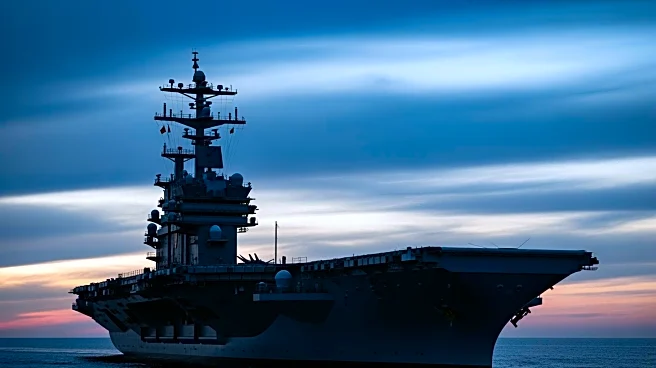
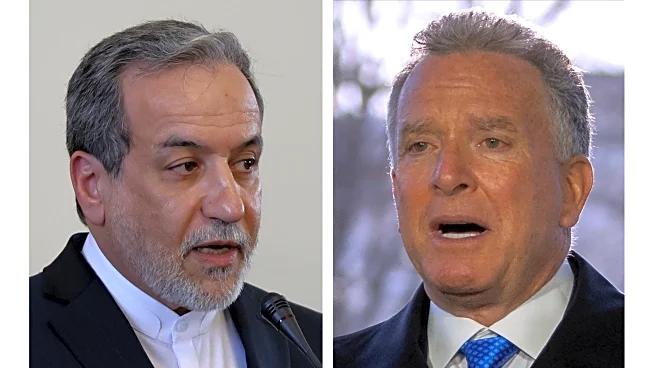
halted the executions of approximately 800 people. This development led to a delay in the decision to strike. The U.S. military had been preparing for a potential attack, with assets moving in the Middle East and allies being warned of a likely strike. However, a text message from Iranian Foreign Minister Abbas Araghchi to the U.S. administration helped ease tensions. Despite the de-escalation, the U.S. Central Command was instructed to remain on high alert. The decision not to strike was influenced by concerns over the potential for a messy conflict that could destabilize the region and endanger U.S. troops. Key allies, including Saudi Arabia and Egypt, urged restraint, fearing regional instability.
Why It's Important?
The decision to hold off on a military strike against Iran is significant as it reflects the complexities of U.S. foreign policy in the Middle East. A strike could have led to a broader conflict, impacting global economic stability and endangering U.S. troops stationed in the region. The move also highlights the influence of diplomatic communications in de-escalating potential military confrontations. The decision underscores the importance of considering the broader geopolitical implications and the potential for unintended consequences in military actions. It also reflects the internal debates within the U.S. administration regarding the best approach to handling international conflicts, balancing military action with diplomatic efforts.
What's Next?
While the immediate threat of a U.S. strike on Iran has been averted, the situation remains tense. The U.S. military continues to maintain a high level of readiness in the region, and additional military assets are expected to arrive soon. This suggests that the option for military action remains on the table, depending on future developments. The U.S. administration may continue to use diplomatic channels to manage tensions, but the potential for conflict persists. The decision also leaves open the possibility of future military actions if the situation in Iran deteriorates or if U.S. interests are threatened.
Beyond the Headlines
The decision not to strike Iran may have deeper implications for U.S. foreign policy and its relationships with Middle Eastern allies. It highlights the challenges of navigating complex regional dynamics and the need for a nuanced approach to international relations. The situation also raises questions about the effectiveness of military interventions in achieving long-term strategic goals and the potential for diplomatic solutions to address conflicts. The decision may influence future U.S. policy decisions and its approach to handling similar situations in other regions.