


What's Happening?
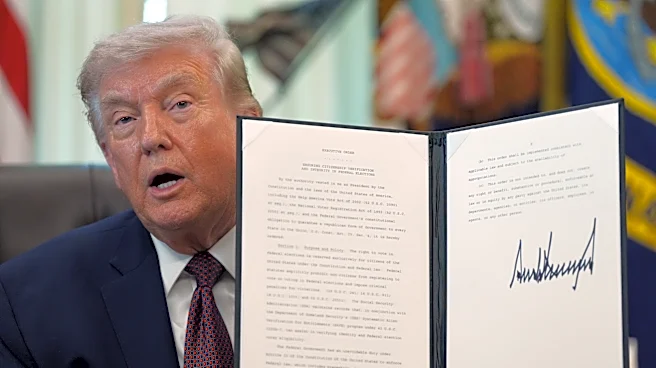
President Trump has signed an executive order aimed at reshaping the administration of mail-in voting in federal elections. The order mandates the creation of lists of U.S. citizens eligible to vote, to be compiled by the Department of Homeland Security
and the Social Security Administration. It also directs the U.S. Postal Service to send mail ballots only to verified voters. The order has been met with immediate criticism from election experts and voting rights advocates, who argue that it oversteps the constitutional authority of the federal government, as election administration is primarily a state responsibility. Legal challenges are expected, with several state officials and advocacy groups preparing to sue to block the order.
Why It's Important?
The executive order represents a significant federal intervention in the administration of elections, traditionally managed by states. If implemented, it could alter the landscape of mail-in voting, a method used by a substantial portion of the electorate. Critics argue that the order could disenfranchise voters and complicate the voting process, particularly in states with established mail-in voting systems. The order's legality is in question, as previous attempts by the Trump administration to influence election procedures have been struck down by courts. The outcome of this legal battle could set a precedent for federal involvement in state-run elections.
What's Next?
Legal challenges are anticipated, with state officials and advocacy groups poised to contest the order in court. The order's implementation could face delays, especially with the upcoming elections. The Supreme Court may also play a role in determining the order's constitutionality. Meanwhile, the Trump administration is pushing for the SAVE America Act, which seeks to impose stricter voter identification requirements, though it faces opposition in Congress.