






What's Happening?
A New York Times reporter, Jazmine Ulloa, has detailed the records that led to questions about a photograph released by Immigration and Customs Enforcement (ICE) following an enforcement operation in northwest Harris County, Houston. The photograph was
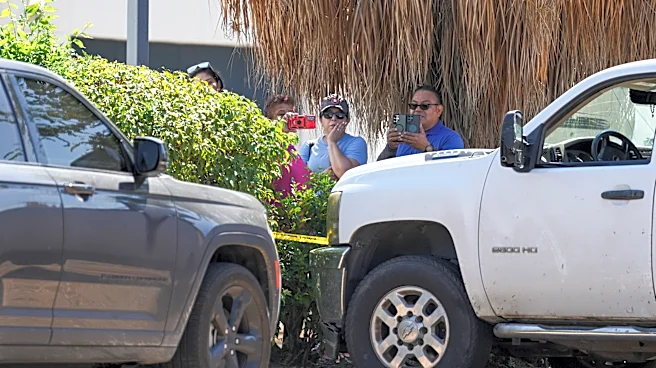
intended to identify an ICE target, Jose Mendoza-Cervantes. However, a Dallas woman, Jamie Jimenez, identified the man in the photo as her father, Jose Hector Jimenez Mendoza, who reportedly died in 2017. Ulloa's team reviewed family photographs, a Mexican death certificate, and court records under the father's given name to corroborate Jimenez's account. The incident also involved an ICE agent striking Miguel Parra-Hernandez with an SUV, leaving him hospitalized. The agent involved is currently on leave during an internal investigation by DHS.
Why It's Important?
This report is significant because it raises serious questions about the accuracy and reliability of information provided by federal agencies like ICE during enforcement operations. If the target photograph was indeed of a deceased individual, it could indicate potential errors in intelligence gathering or identification processes, which has profound implications for public trust and the integrity of law enforcement actions. The incident also highlights the human impact of immigration enforcement, as Miguel Parra-Hernandez was injured, and the family of the deceased man is now dealing with their father's image being used in a controversial context. The ongoing investigations by the Harris County District Attorney's Office, the sheriff's office, and DHS underscore the gravity of these allegations and the need for accountability and transparency in federal operations.
What's Next?
The local and federal investigations into the incident are ongoing. Authorities will need to address the discrepancy regarding the identity of the man in the ICE target photograph and clarify how such an error, if confirmed, occurred. The DHS internal investigation will determine if the agent who struck Miguel Parra-Hernandez acted appropriately. The findings of these investigations could lead to policy changes within ICE regarding target identification and the use of force. Furthermore, the family of Jose Hector Jimenez Mendoza may seek further clarification or legal action regarding the use of their deceased father's image. The outcome of these inquiries will be crucial for restoring public confidence and ensuring accountability in future immigration enforcement activities.
Beyond the Headlines
This incident delves into the broader challenges of identity verification and data accuracy in an era of complex migration patterns and digital information. The use of aliases, as suggested by the family, complicates identification efforts for law enforcement. More profoundly, it touches upon the ethical responsibility of government agencies to ensure the accuracy of information they disseminate, especially when it pertains to individuals' reputations and legal statuses. The emotional distress caused to the family by seeing their deceased father's image associated with a wanted person underscores the human cost of such errors. This case could prompt a re-evaluation of how federal agencies manage and verify intelligence, potentially leading to enhanced protocols for cross-referencing data and engaging with community input to prevent similar incidents in the future. It also highlights the critical role of investigative journalism in holding powerful institutions accountable.