







What's Happening?
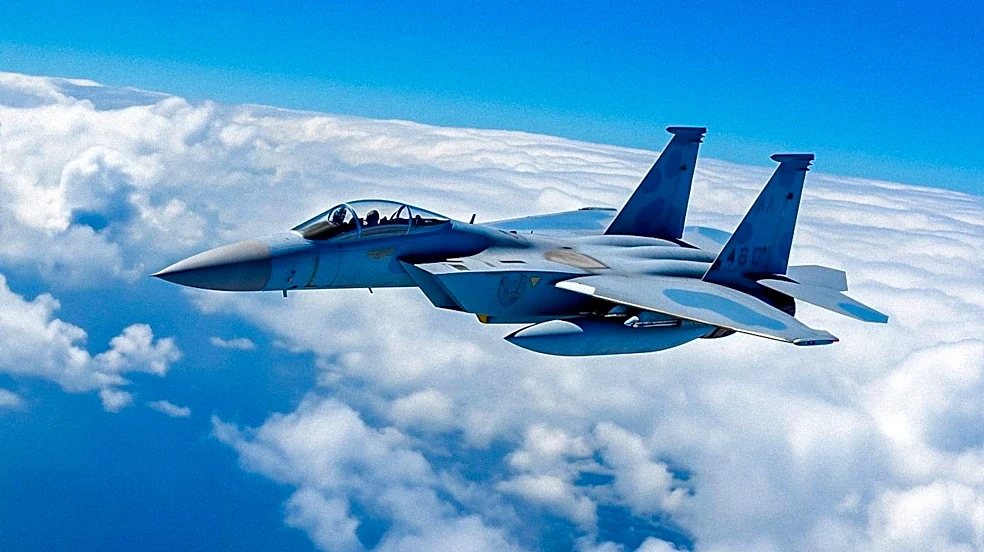
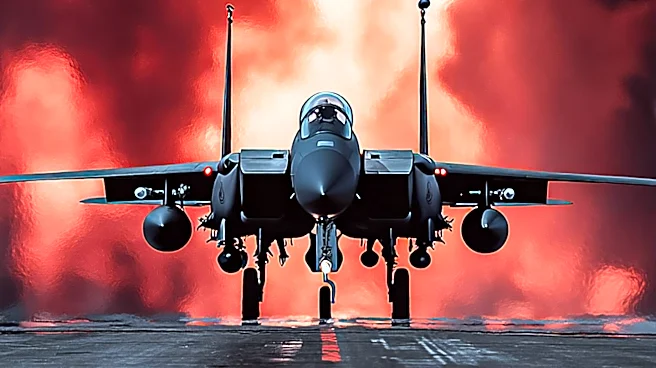
Selfridge Air National Guard Base in Michigan is preparing to receive the F-15EX Eagle II, a modernized fighter jet built by Boeing. This marks a historic first for Michigan's Air National Guard, as it has never before received a brand-new aircraft directly
assigned to its fleet. The F-15EX Eagle II, while resembling earlier F-15 models externally, features significant internal upgrades. These include an advanced radar system, over 30 onboard computers, an 11-by-19-inch touchscreen cockpit display, fly-by-wire flight controls, and sophisticated electronic warfare defenses. The aircraft is capable of speeds exceeding Mach 2 and can carry up to 12 air-to-air missiles, along with a 20-millimeter Gatling gun. According to Jason Dotter, a former Air Force test pilot now with Boeing, the F-15EX's payload capacity, range, sensors, and survivability make it unmatched. Major General Paul Rogers, adjutant general of the Michigan National Guard, highlighted the importance of these capabilities for defending the homeland, particularly given Selfridge's strategic location for northern defense, as noted by Jonathan Varoli, the U.S. Air Force’s F-15 program manager.
Why It's Important?
The arrival of the F-15EX Eagle II at Selfridge Air National Guard Base is a significant development for U.S. national defense and the state of Michigan. This upgrade enhances the nation's air defense capabilities, particularly in the northern United States, by deploying one of the Air Force's most advanced fighter jets. The F-15EX's superior technology, including its advanced radar, extensive computing power, and electronic warfare systems, provides a critical edge in modern aerial combat and intelligence gathering. For Michigan, this represents a substantial investment in its military infrastructure and a recognition of Selfridge's strategic importance. The deployment ensures that the Michigan Air National Guard is equipped with cutting-edge technology, potentially attracting further defense-related investments and skilled personnel to the region. This move also underscores a broader strategy to modernize the U.S. Air Force's fleet, ensuring its readiness and superiority in an evolving global security landscape. The F-15EX's ability to carry a large weapons payload over long distances offers increased flexibility and deterrence capabilities, benefiting national security stakeholders.
What's Next?
The Selfridge Air National Guard Base will proceed with the integration of the F-15EX Eagle II into its operations. This will involve extensive training for pilots and ground crews to familiarize themselves with the advanced systems and capabilities of the new aircraft. Lt. Col. Shannon Vickers, operations commander with the 127th Wing at Selfridge, expressed the anticipation among personnel, comparing it to receiving a long-awaited gift. The base will likely undergo necessary infrastructure adjustments to accommodate the F-15EX, including maintenance facilities and operational protocols. Major General Paul Rogers anticipates that the F-15EX will provide Michigan with a crucial role in national defense for decades, suggesting a long-term commitment to this aircraft and its mission. The successful integration of these jets will solidify Selfridge's position as a key asset in the U.S. Air Force's strategic defense network, potentially leading to further modernization efforts and increased operational responsibilities.
Beyond the Headlines
The deployment of the F-15EX Eagle II at Selfridge Air National Guard Base signifies more than just a technological upgrade; it reflects a strategic shift in U.S. air defense priorities and capabilities. While the F-15EX is not a traditional stealth fighter, its advanced electronic warfare systems, described as a 'cloaking device' by Boeing's Jason Dotter, highlight a growing emphasis on electronic countermeasures and information dominance in modern warfare. This development also raises questions about the balance between stealth technology and other forms of survivability and offensive power in future air combat scenarios. The F-15EX's extensive use of digital technology, such as the 'giant iPad' cockpit, underscores the increasing role of information management for fighter pilots, transforming them into 'information managers' rather than just aviators. This evolution in pilot skill sets and aircraft design points towards a future where data processing and electronic warfare capabilities are as crucial as raw speed and maneuverability, influencing long-term defense procurement and training strategies.