






What's Happening?
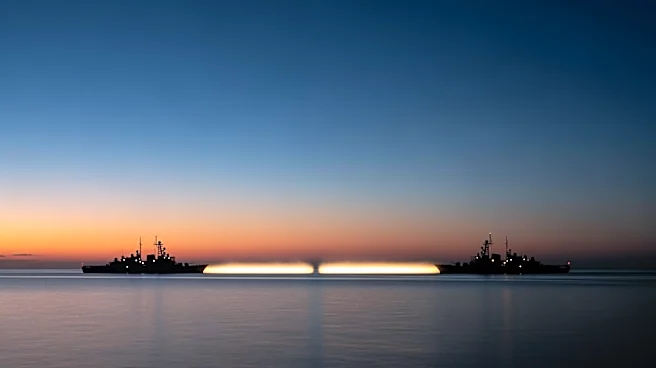
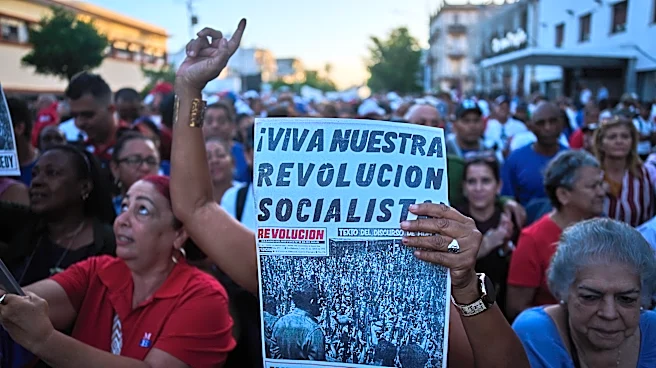
In a recent diplomatic development, Cuban President Miguel Díaz-Canel has declared that Cuba is prepared to defend itself against any potential military aggression from the United States. This statement comes amid heightened tensions following a visit
by a U.S. delegation to Havana, which marked the first such visit since 2016. The U.S. delegation, which did not include Secretary of State Marco Rubio, met with Cuban officials, including Raúl Guillermo Rodríguez Castro, the grandson of retired leader Raúl Castro. The discussions focused on urging Cuba to implement significant changes to its economy and governance to prevent it from becoming a regional security threat. President Trump has described Cuba as a 'failing nation' and suggested that the U.S. might focus on Cuba after resolving conflicts in Iran. In response, Díaz-Canel emphasized Cuba's readiness to confront serious threats, drawing parallels to historical moments of national defense.
Why It's Important?
This development is significant as it highlights the ongoing diplomatic and military tensions between the U.S. and Cuba. The U.S. has been pushing for economic and political reforms in Cuba, linking these changes to the easing of sanctions. The potential for military conflict, as suggested by President Trump's comments, could have far-reaching implications for regional stability and U.S.-Cuba relations. The situation also underscores the challenges faced by the Cuban government in navigating international pressures while maintaining its sovereignty. The U.S.'s strategic interests in the region, coupled with its historical stance on Cuba, make this a critical juncture for both nations.
What's Next?
The future of U.S.-Cuba relations remains uncertain, with potential diplomatic and military actions on the horizon. The U.S. may continue to press for reforms in Cuba, possibly leveraging economic incentives or sanctions. Meanwhile, Cuba's response to these pressures will be crucial in determining the next steps. The international community will likely monitor the situation closely, as any escalation could impact regional dynamics and global diplomatic relations. Additionally, the proposed U.S. initiative to provide internet access via Starlink could become a point of contention or cooperation, depending on how negotiations proceed.