





What's Happening?
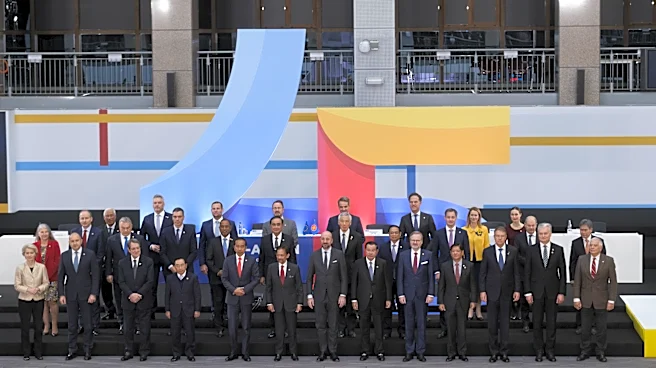
France's Foreign Ministry announced on Thursday a last-minute decision to move next week's G7 foreign ministers' meeting from Marseille to Paris. The meeting, scheduled for Monday and Tuesday, will address sea and port security, as well as the conflicts
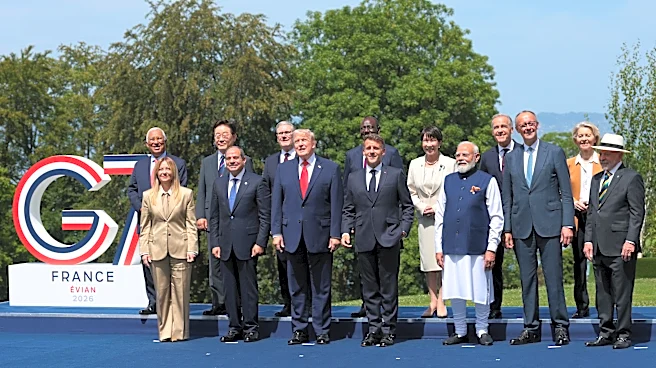
in the Middle East and Ukraine. The official reason provided for the change is logistical, specifically to ensure the smooth running of both the G7 meeting and the Paris Peace Forum, which is set to immediately follow on Wednesday and Thursday. Both events have had their dates known for over six months, and Marseille was designated as the G7 host city months ago. The G7 member nations include France, Germany, the United Kingdom, Italy, Japan, Canada, and the United States. Foreign ministers from Ukraine and other partner countries have also been invited to attend the conference.
Why It's Important?
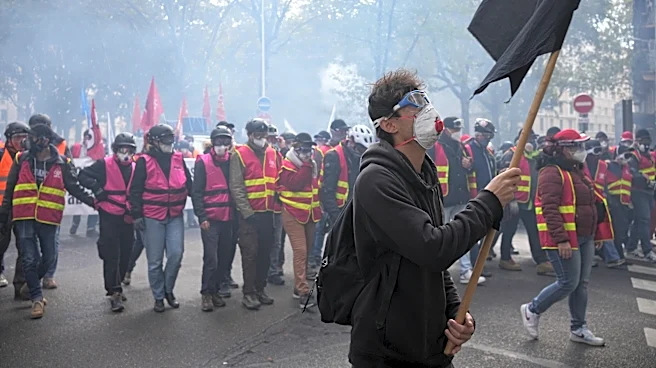
The relocation of a high-profile international meeting like the G7 foreign ministers' conference, especially at the last minute, can have several implications. For the United States, as a key G7 member, such changes require immediate adjustments for its diplomatic delegation, potentially affecting travel plans, security arrangements, and preparatory logistics. While cited as logistical, the move also comes after Marseille experienced significant rioting and violence during mass protests last month, raising questions about underlying security concerns, even if not explicitly stated by the French Foreign Ministry. The discussions on global challenges, including the Middle East and Ukraine conflicts, are critical for U.S. foreign policy, and any disruption to the meeting's smooth operation could impact the effectiveness of these diplomatic efforts. The shift to Paris, a more established hub for international diplomacy, might be seen as an attempt to ensure a more controlled and secure environment for these crucial discussions.
What's Next?
The G7 foreign ministers' meeting will proceed as scheduled on Monday and Tuesday in Paris, followed by the Paris Peace Forum. Delegations, including that of the United States, will need to adapt to the venue change. The agenda remains focused on critical international issues such as sea and port security and the ongoing conflicts in the Middle East and Ukraine. The discussions are expected to shape coordinated responses and diplomatic strategies among the leading industrialized nations. The French government will likely continue to emphasize the logistical rationale for the move, while observers may continue to consider the broader context of recent social unrest in France. The outcomes of these meetings will be closely watched for their impact on global stability and international relations.
Beyond the Headlines
The last-minute relocation of the G7 meeting, while officially attributed to logistics, subtly highlights the increasing complexities and potential vulnerabilities associated with hosting major international events in an era of heightened social and political unrest. The recent riots in Marseille, even if not the direct cause, underscore the challenges governments face in guaranteeing security for high-level diplomatic gatherings. This incident could prompt future hosts of international summits to re-evaluate their selection criteria for venues, potentially favoring locations with more robust security infrastructure or those less prone to civil disturbances. For the G7, a group focused on global stability, the internal stability of host nations could become an unspoken, yet significant, factor in their operational planning, potentially influencing the perceived reliability and image of host countries on the international stage.