



What's Happening?
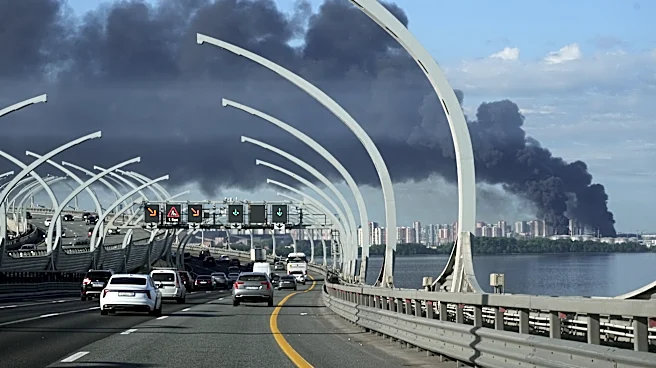
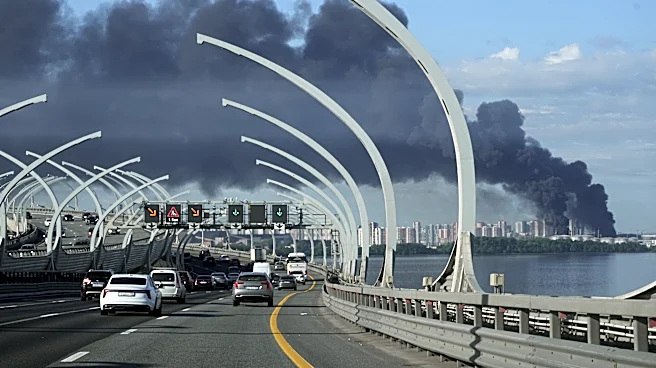
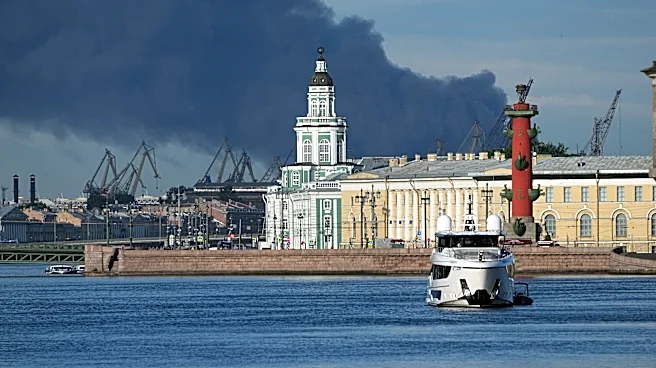
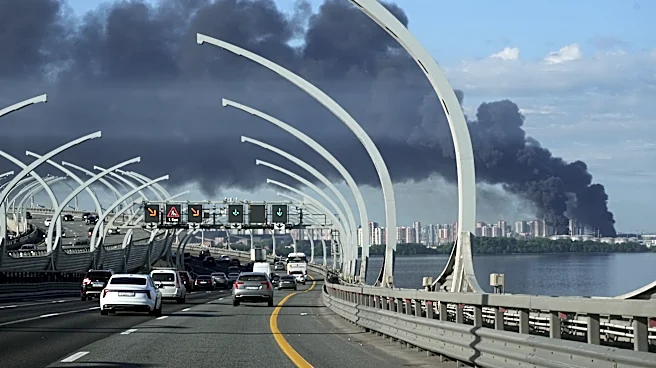
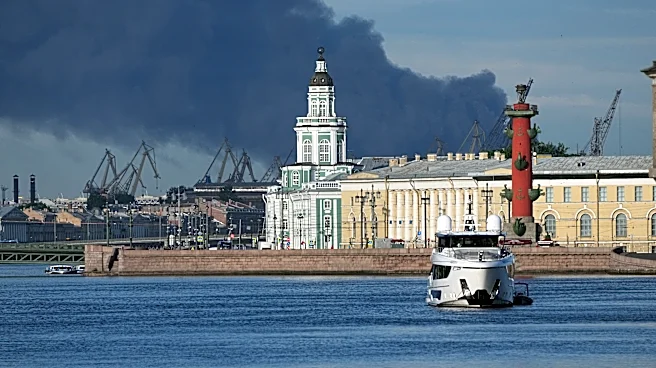
Ukraine has launched a large-scale drone attack on St. Petersburg, Russia, marking a significant escalation in the ongoing conflict. The attack comes after President Vladimir Putin rejected Ukrainian President Volodymyr Zelenskyy's proposal for direct
talks. St. Petersburg residents were advised to stay indoors, and disruptions to mobile internet services were reported. The attack follows a previous strike on an oil terminal in the city, coinciding with the St. Petersburg International Economic Forum. Russia's Defense Ministry reported shooting down numerous Ukrainian drones, while Ukrainian air defenses intercepted a majority of Russian drones targeting Ukraine.
Why It's Important?
The drone attacks on St. Petersburg highlight Ukraine's growing capability to strike deep within Russian territory, challenging Russia's narrative of the conflict being a distant issue. This development could alter the dynamics of the war, as both sides increasingly rely on long-range strikes to gain an advantage. The attacks also underscore the limitations of Russia's air defenses and the potential vulnerability of key Russian cities. The escalation in drone warfare may lead to increased military and civilian casualties, further complicating diplomatic efforts to resolve the conflict.
What's Next?
The ongoing drone warfare is likely to continue, with both Russia and Ukraine seeking to enhance their air defense capabilities. The international community may face increased pressure to intervene diplomatically to prevent further escalation. The rejection of direct talks by President Putin suggests that diplomatic solutions remain elusive, potentially prolonging the conflict. The situation may also prompt discussions on the regulation and use of drone technology in warfare.