




What's Happening?
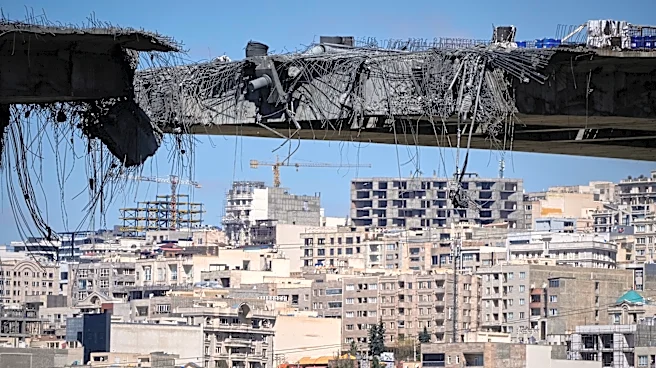
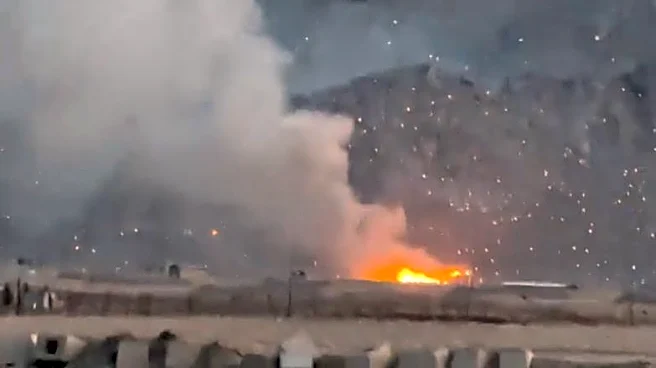
The ongoing conflict with Iran has significantly impacted China's Belt and Road Initiative (BRI), a multi-year program aimed at enhancing global trade routes. Iran, a crucial hub in the BRI's China-Middle East corridor, has seen its infrastructure projects,
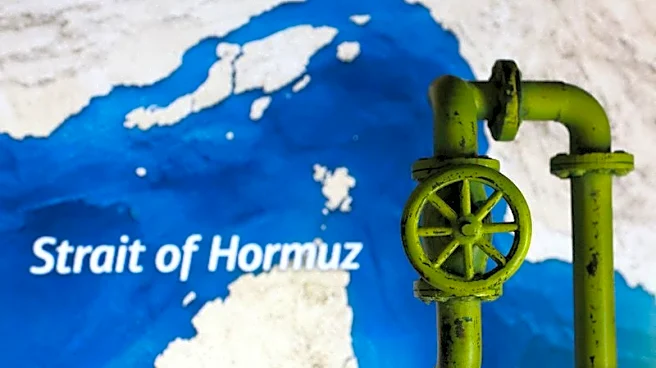
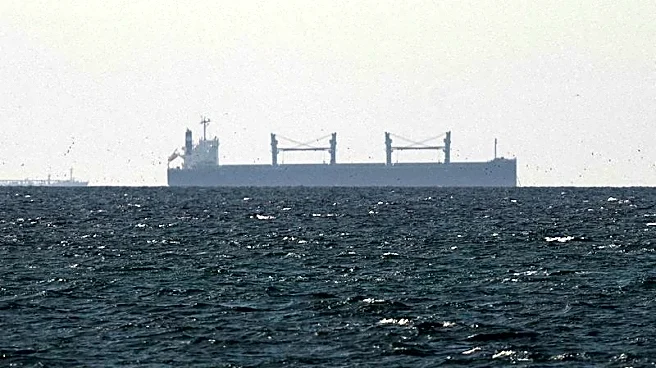
including rail and port developments, face uncertainty and potential destruction. The war has disrupted the flow of energy through the Strait of Hormuz, a vital passage for Gulf energy supplies, which are essential to the BRI's economic foundation. This conflict has also led to instability in other BRI-involved countries, exposing Chinese investments to military risks and energy shortages. As a result, China is reconsidering its strategy, shifting from expansion to resilience, and exploring alternative routes through Central Asia and Southeast Asia.
Why It's Important?
The disruption of the BRI due to the Iran conflict highlights the vulnerability of global infrastructure projects to geopolitical tensions. For China, this means a potential slowdown in its ambition to become a leading global superpower through economic connectivity. The reliance on Gulf energy and the instability in the region could lead to increased costs and delays in project completion. This situation also underscores the challenges of maintaining neutrality in geopolitically sensitive areas, as investments become susceptible to regional conflicts. The shift towards alternative routes may lead to a more fragmented BRI, affecting China's long-term strategic goals and its economic relationships with participating countries.
What's Next?
China is likely to focus on risk management, stockpiling energy, and reducing exposure to unstable regions. The BRI may see increased reliance on Central Asian and Southeast Asian routes, potentially leading to new alliances and partnerships. This strategic shift could also influence China's foreign policy, as it seeks to secure its investments and maintain trade stability. The ongoing conflict may prompt China to reassess its involvement in other high-risk regions, potentially altering the global economic landscape and affecting international trade dynamics.