



What's Happening?
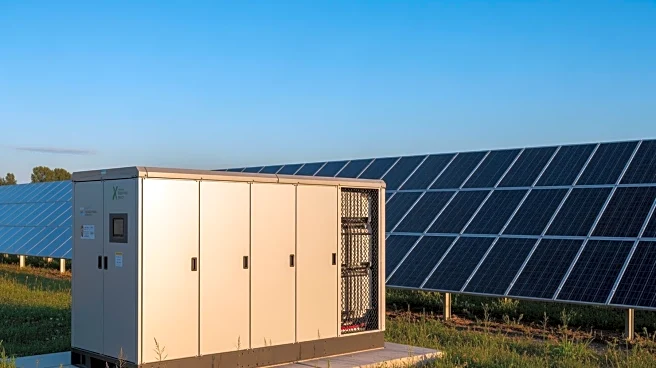
A significant development in renewable energy is taking place in Australia, where a solar power farm equipped with nearly one million solar panels has been established. This facility also includes a substantial battery system, capable of storing excess
solar power generated during peak sunlight hours. The solar farm provides clean electricity to approximately 300,000 homes, showcasing the potential of solar energy as a viable alternative to traditional fossil fuels. The cost of solar panels has decreased by about 90% over the past decade, making solar power installations more economically feasible than coal or gas power plants. Additionally, the solar farm is located on land that supports sheep grazing, offering dual benefits of energy production and agricultural use.
Why It's Important?
The integration of solar power with large-scale battery storage addresses the intermittency issue associated with solar energy, ensuring a reliable supply of electricity even during non-sunny periods. This development highlights the decreasing costs of solar panels and batteries, which are crucial for the widespread adoption of renewable energy. The project also provides economic benefits to local farmers through lease income, helping them withstand financial challenges posed by adverse weather conditions. Furthermore, the solar farm contributes to job creation during its construction and operation phases, supporting local economies. The shift towards renewable energy sources like solar power is essential for reducing toxic emissions from fossil fuels, thereby improving environmental and public health.
What's Next?
As solar technology continues to advance and costs decrease, more regions may adopt similar renewable energy projects. The success of this solar farm could encourage further investments in solar and battery systems, potentially leading to increased energy independence and sustainability. Policymakers and energy companies might explore additional opportunities to integrate renewable energy into existing grids, enhancing overall energy resilience. The positive impact on local economies and the environment may drive further support for renewable energy initiatives, influencing future energy policies and infrastructure development.
Beyond the Headlines
The solar farm's dual-purpose land use, combining energy production with agriculture, represents a sustainable approach to land management. This model could be replicated in other regions, promoting biodiversity and land conservation alongside renewable energy development. The project also challenges misconceptions about solar power, emphasizing its benefits over fossil fuels, such as reduced health risks and environmental impact. As public awareness of renewable energy grows, societal attitudes may shift towards greater acceptance and support for clean energy solutions.