





What's Happening?
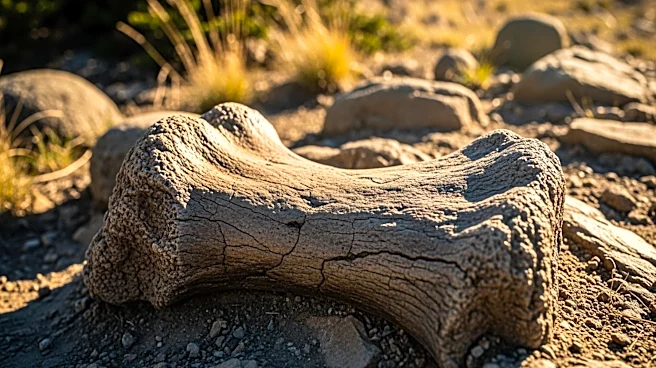
A shepherd in Patagonia has discovered 65-foot dinosaur fossils beneath his farm, which do not belong to any recognized group. The newly identified dinosaur, named Bicharracosaurus dionidei, presents a unique combination of features associated with both
brachiosaurids and diplodocids. This discovery, made in the Cańadón Calcáreo Formation, dates back approximately 155 million years and is considered the first Jurassic brachiosaurid identified in South America. The fossils include more than 30 vertebrae, ribs, and part of the pelvis, suggesting the dinosaur was about 65 feet long. The research, published in PeerJ, highlights the significance of this find in understanding the evolution of sauropods in the Southern Hemisphere.
Why It's Important?
The discovery of Bicharracosaurus dionidei is significant as it fills a major gap in the fossil record from the ancient southern supercontinent Gondwana. Most sauropod fossils have been found in North America and Africa, making this find crucial for understanding the evolutionary history of these dinosaurs in South America. The unique combination of features in Bicharracosaurus dionidei challenges existing classifications and provides new insights into sauropod evolution. This discovery also underscores the importance of Patagonia as a rich source of paleontological information, contributing to a more comprehensive understanding of Jurassic ecosystems.